Gallery · Nº 01
La Grande Jatte
Two metres by three. Everything in it is standing still, and the colours are already wrong.
01
2 × 3 metres
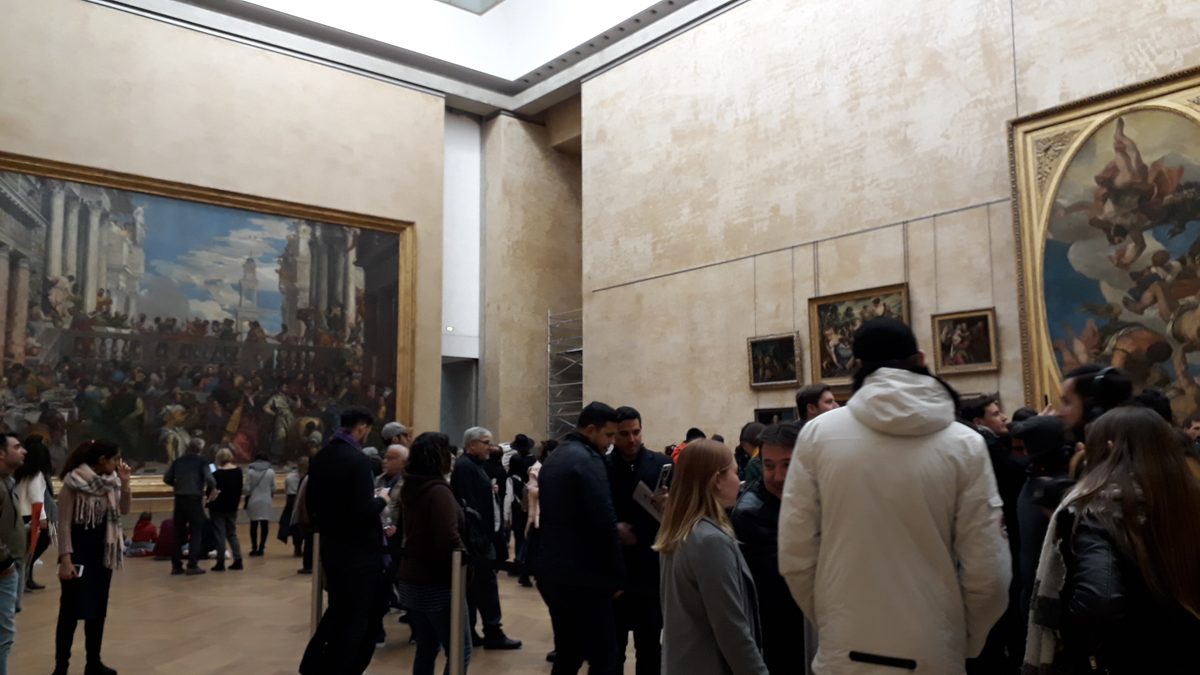
and you have only ever seen it shrunk…
It is over two metres tall and more than three across. On a screen it is a postcard, but in the room it fills your vision — and it is too fragile to travel, so it effectively lives in one gallery in Chicago and always will.
207.5 × 308.1 cm. Art Institute of Chicago, 1926.224; not lent for travel.
02
Nobody is moving
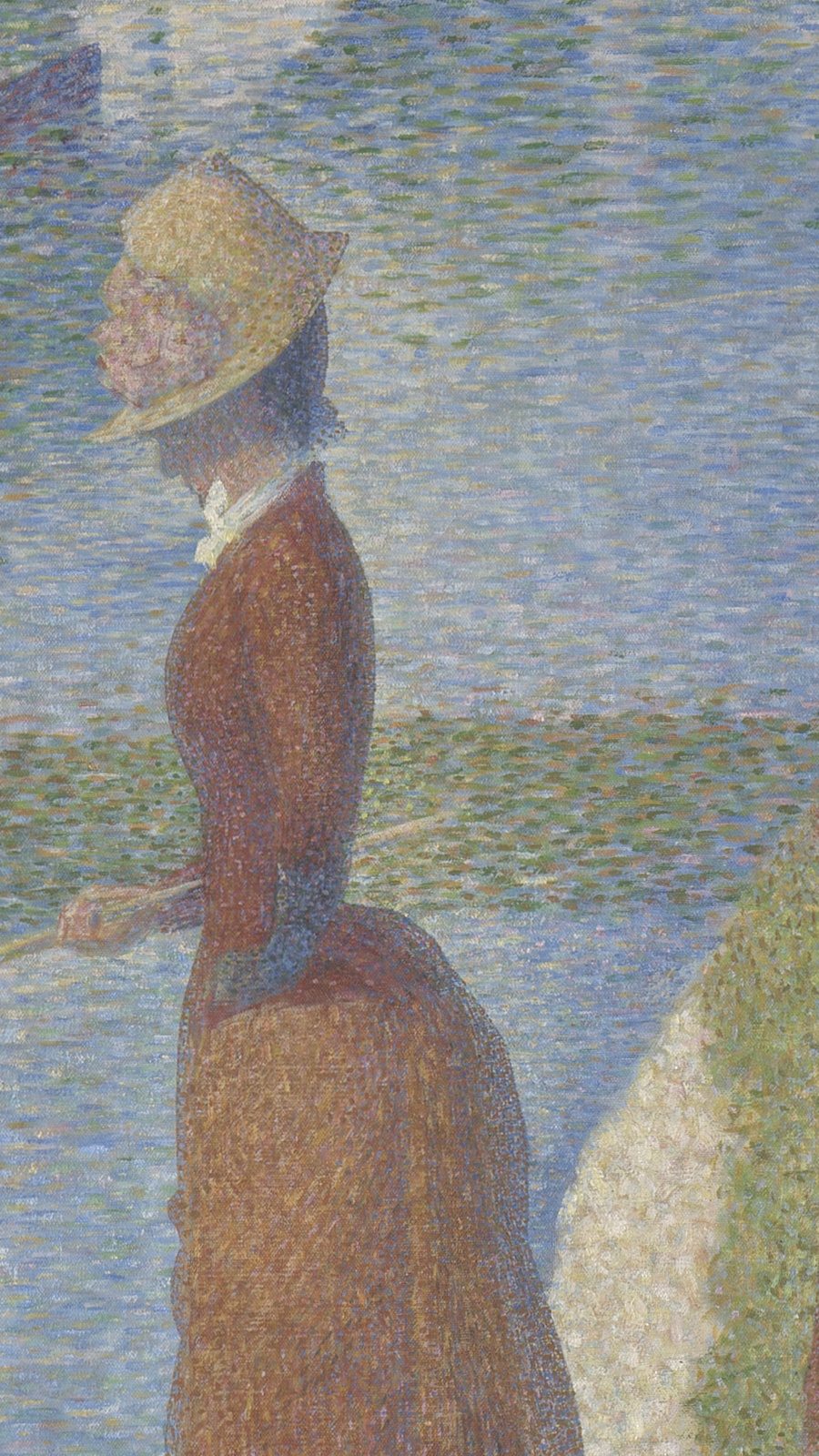
and almost nobody looks at you…
About forty-eight people are out on a Sunday, and not one is caught mid-gesture. They stand in profile or square on, spaced and still, like figures on an Egyptian wall. Seurat painted leisure as ritual, not as fun.
~48 figures, posed in strict profile or frontal view; compared to Egyptian relief and to Piero della Francesca.
03
The dots are a theory
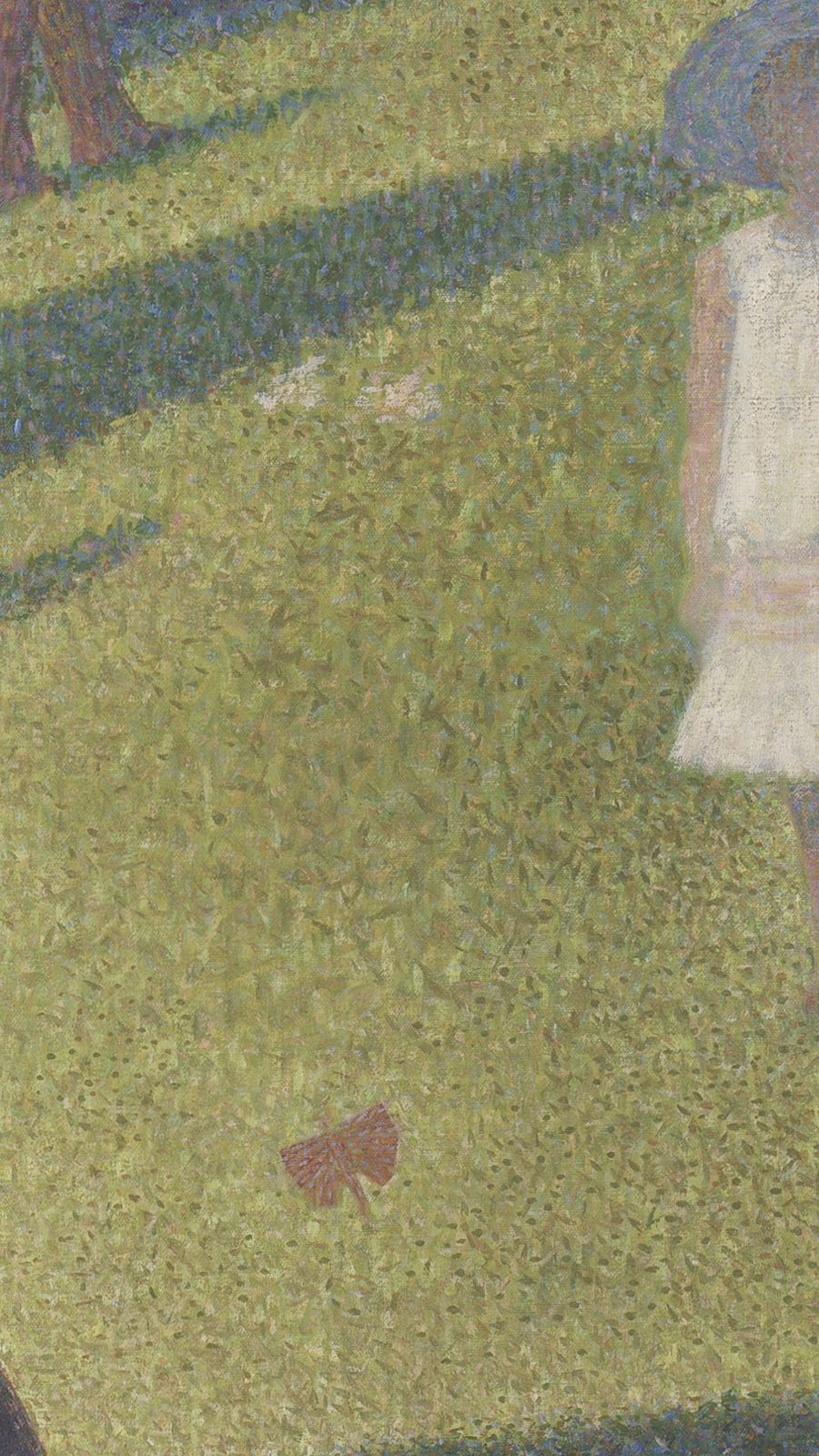
borrowed from a chemist and a physicist…
Seurat had read Chevreul on how colours affect their neighbours and Rood on optical mixing. Separate dots of pure pigment, he thought, would combine in the eye, brighter than the same colours mixed on the palette. That is not quite how vision works.
Chevreul, simultaneous contrast; Ogden Rood, Modern Chromatics. Optical mixture occurs only where marks are unresolved, and does not yield the luminosity Seurat expected.
04
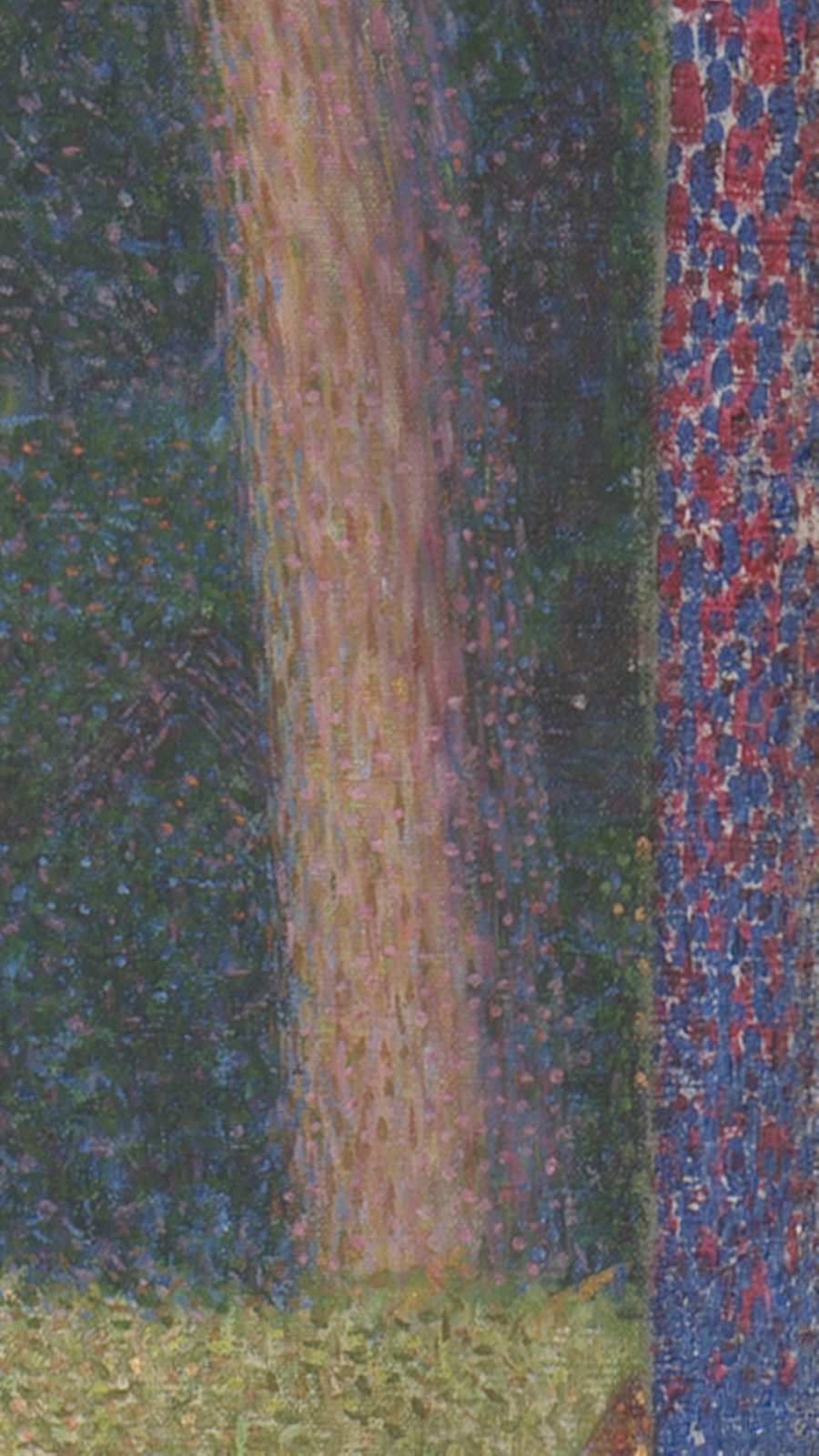
1888
two years after he had finished it…
Look at the very edge. That band of red and blue dots is not a frame — Seurat painted a border straight onto the canvas in 1888, two years after the painting was done, so it would meet the wall on his terms rather than a framer's.
Art Institute dates the painted border to 1888–89. Seurat added painted borders to several works.
05
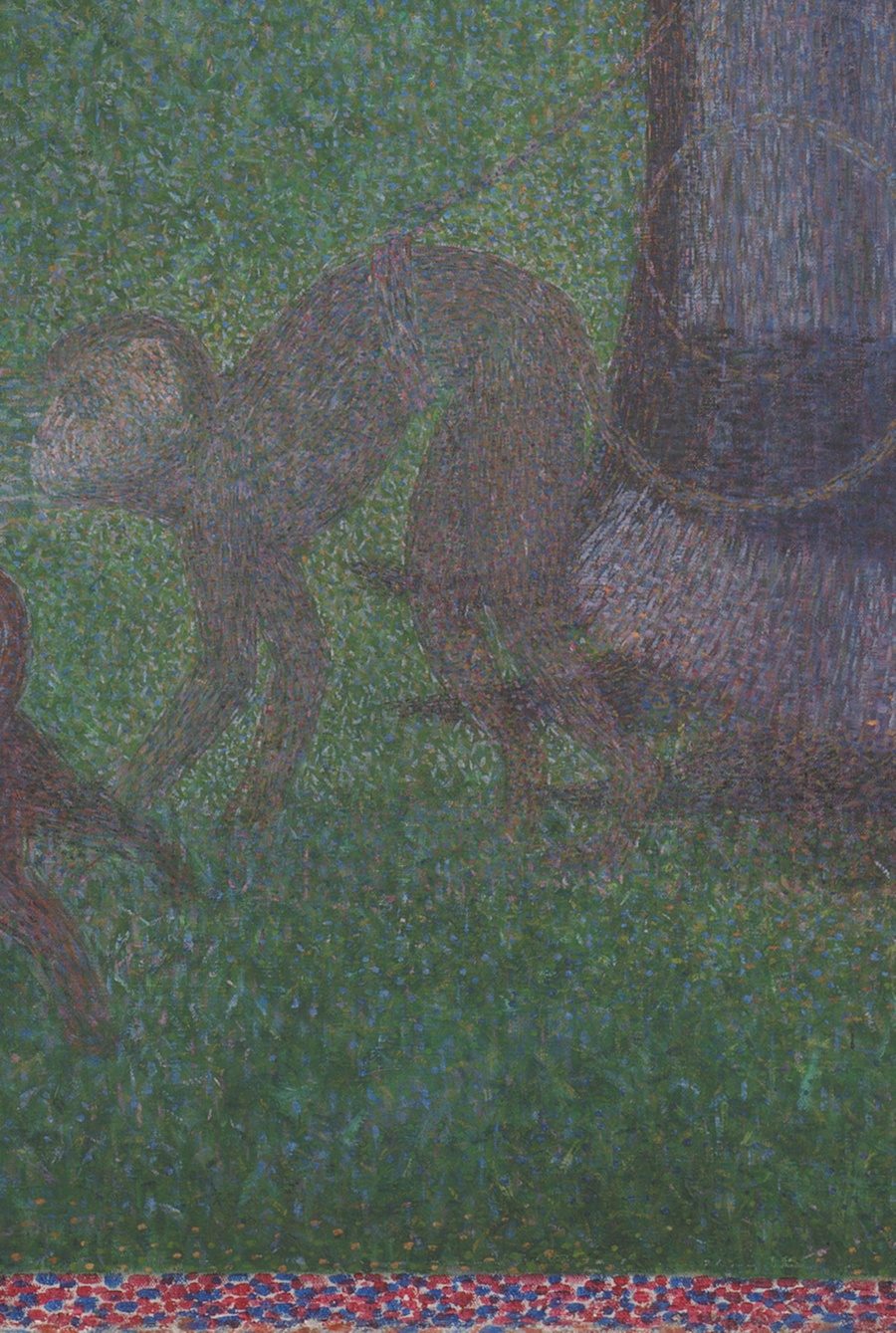
Then there is the monkey
and this is where people disagree…
The woman on the right walks a monkey on a lead. Singesse, the female of the word, was Parisian slang for a prostitute, and some read her that way. Others say it is about fashion, or nothing at all. The painting does not settle it.
The monkey has been read as an allusion to 'singesse', Parisian slang for a prostitute; the Île was known for solicitation. The reading is disputed; no record of Seurat's intent survives.
06
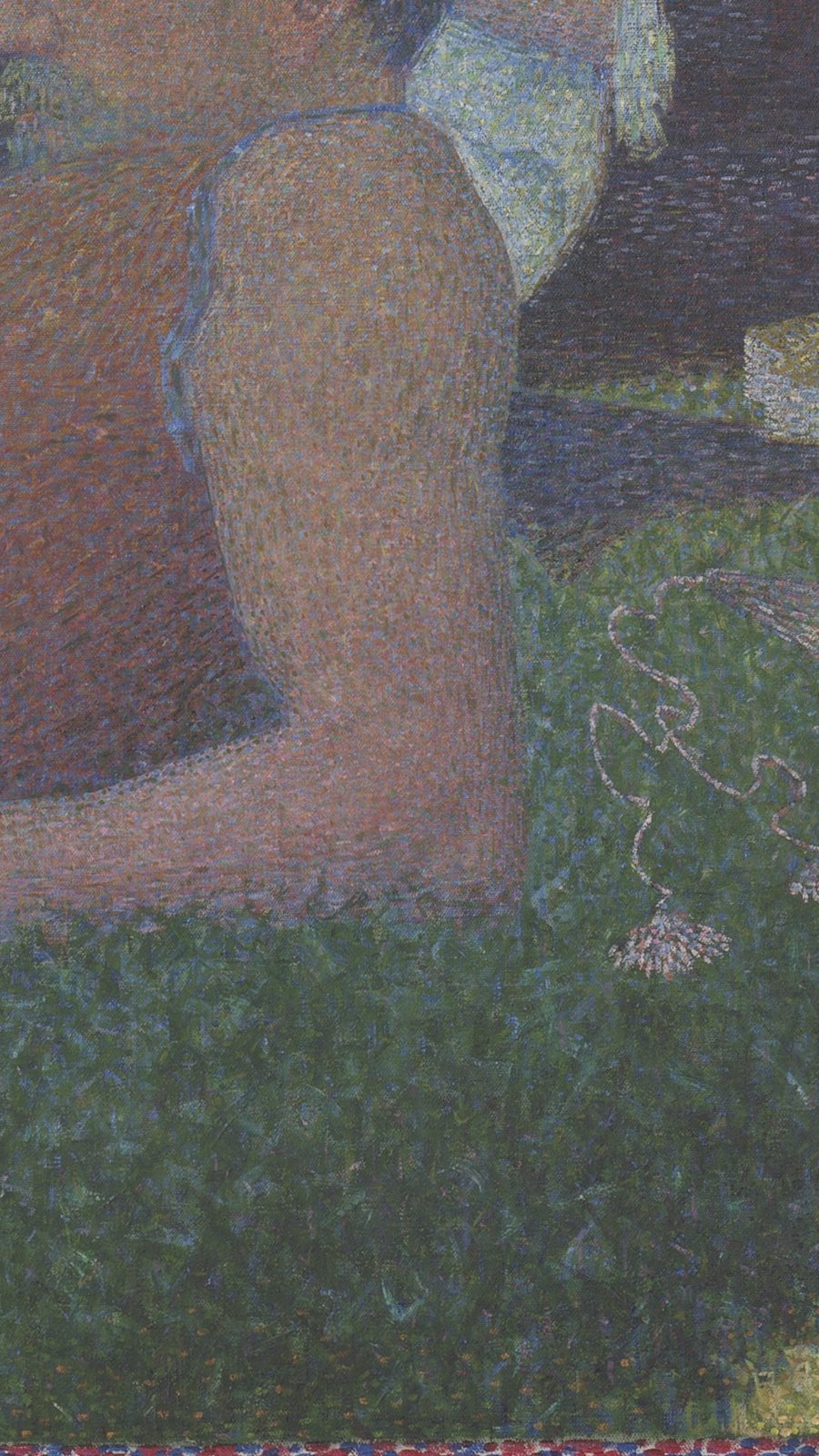
The colours are already wrong
and it started while he was alive…
He used a new pigment, zinc yellow, for the sunlit grass. It was unstable. The chromium in it began to reduce and the dots browned — noticed within a year of his death. What hangs in Chicago is duller than what he painted, and getting no brighter.
Zinc potassium chromate darkens as Cr(VI) reduces to Cr(III); darkening recorded by 1892. Berns has produced a digital reconstruction of the original colour.
Sources
- 207.5 × 308.1 cm. Art Institute of Chicago, 1926.224; not lent for travel.
- ~48 figures, posed in strict profile or frontal view; compared to Egyptian relief and to Piero della Francesca.
- Chevreul, simultaneous contrast; Ogden Rood, Modern Chromatics. Optical mixture occurs only where marks are unresolved, and does not yield the luminosity Seurat expected.
- Art Institute dates the painted border to 1888–89. Seurat added painted borders to several works.
- The monkey has been read as an allusion to 'singesse', Parisian slang for a prostitute; the Île was known for solicitation. The reading is disputed; no record of Seurat's intent survives.
- Zinc potassium chromate darkens as Cr(VI) reduces to Cr(III); darkening recorded by 1892. Berns has produced a digital reconstruction of the original colour.
Image credits
- A Sunday on La Grande Jatte — Unknown, CC0 / public domain
- Visitors looking at italian paintings in the Louvre Museum - Paris, France, 2019 49.jpg — Unknown, CC BY-SA 4.0 · Commons
- A Sunday on La Grande Jatte — 1884 — Unknown, CC0 / public domain
- A Sunday on La Grande Jatte — 1884 — Unknown, CC0 / public domain
- A Sunday on La Grande Jatte — 1884 — Unknown, CC0 / public domain
- A Sunday on La Grande Jatte — 1884 — Unknown, CC0 / public domain
- A Sunday on La Grande Jatte — 1884 — Unknown, CC0 / public domain