Nobel Laureates · Nº 03
Commons
Economics said shared land must die. She went and looked.
01 / 08
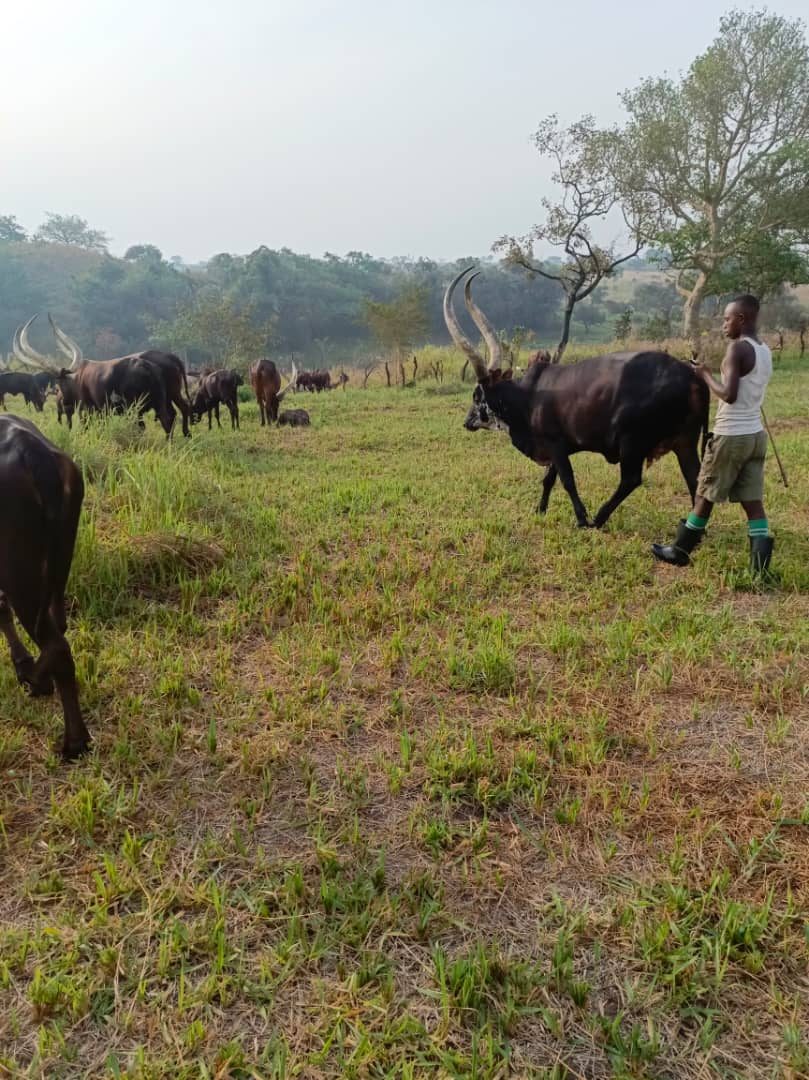
1968
the year the dogma was set…
Garrett Hardin published a parable. Shared pasture, rational herders, inevitable ruin — everyone adds one more cow until the grass dies. Only two things could save a commons, he concluded: private ownership, or the state.
Garrett Hardin, 'The Tragedy of the Commons', Science, 1968.
02 / 08
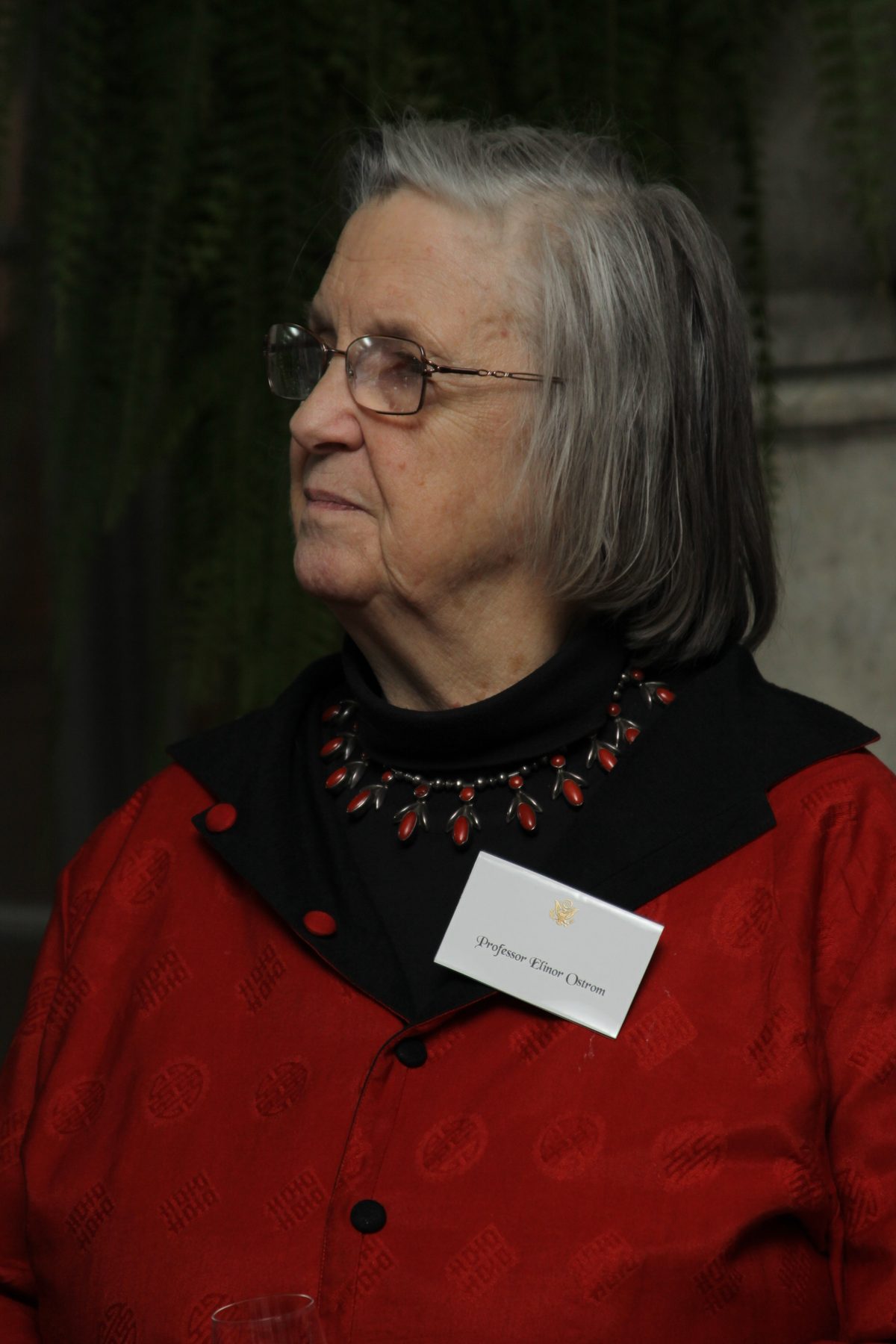
Barred from trigonometry
Los Angeles, and a closed door…
Her high school would not let girls take trigonometry without top marks in algebra. So she never took it. Years later UCLA's economics department rejected her for exactly that missing class. She studied political science instead.
Ostrom was barred from high-school trigonometry; rejected by UCLA economics; PhD political science 1965.
03 / 08

1483
a rule still obeyed in the Alps…
In the Swiss village of Törbel, farmers signed an agreement over their mountain pasture. One rule did most of the work: no one may graze more cows in summer than they can feed through the winter. It still holds.
Törbel, Valais: communal agreement of 1 February 1483; the winter-feed rule. Ostrom's first case study.
04 / 08
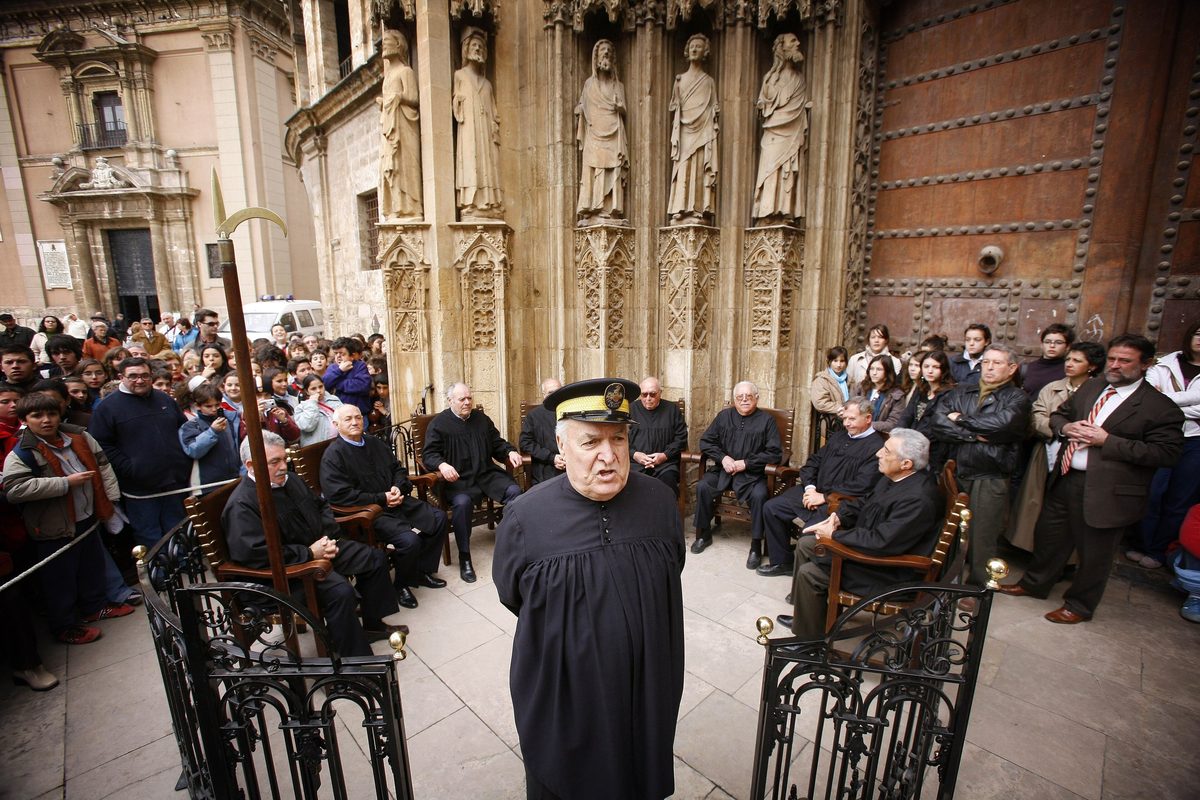
Every Thursday at noon
outside the cathedral, still…
Eight farmers in black smocks meet at the door of Valencia Cathedral to settle arguments over irrigation water. No lawyers, no written records, no appeal. They have done it since the tenth century — the oldest court on Earth.
Tribunal de las Aguas, Valencia: 10th-century origins, meets Thursdays at noon; UNESCO listed 2009.
05 / 08

8 rules
what the survivors had in common…
Ostrom went looking for the tragedy and kept finding its opposite. From the commons that lasted she drew eight shared principles — clear boundaries, locally made rules, monitors from within the community, and penalties that begin with mild embarrassment.
Ostrom's eight design principles, Governing the Commons (1990).
06 / 08
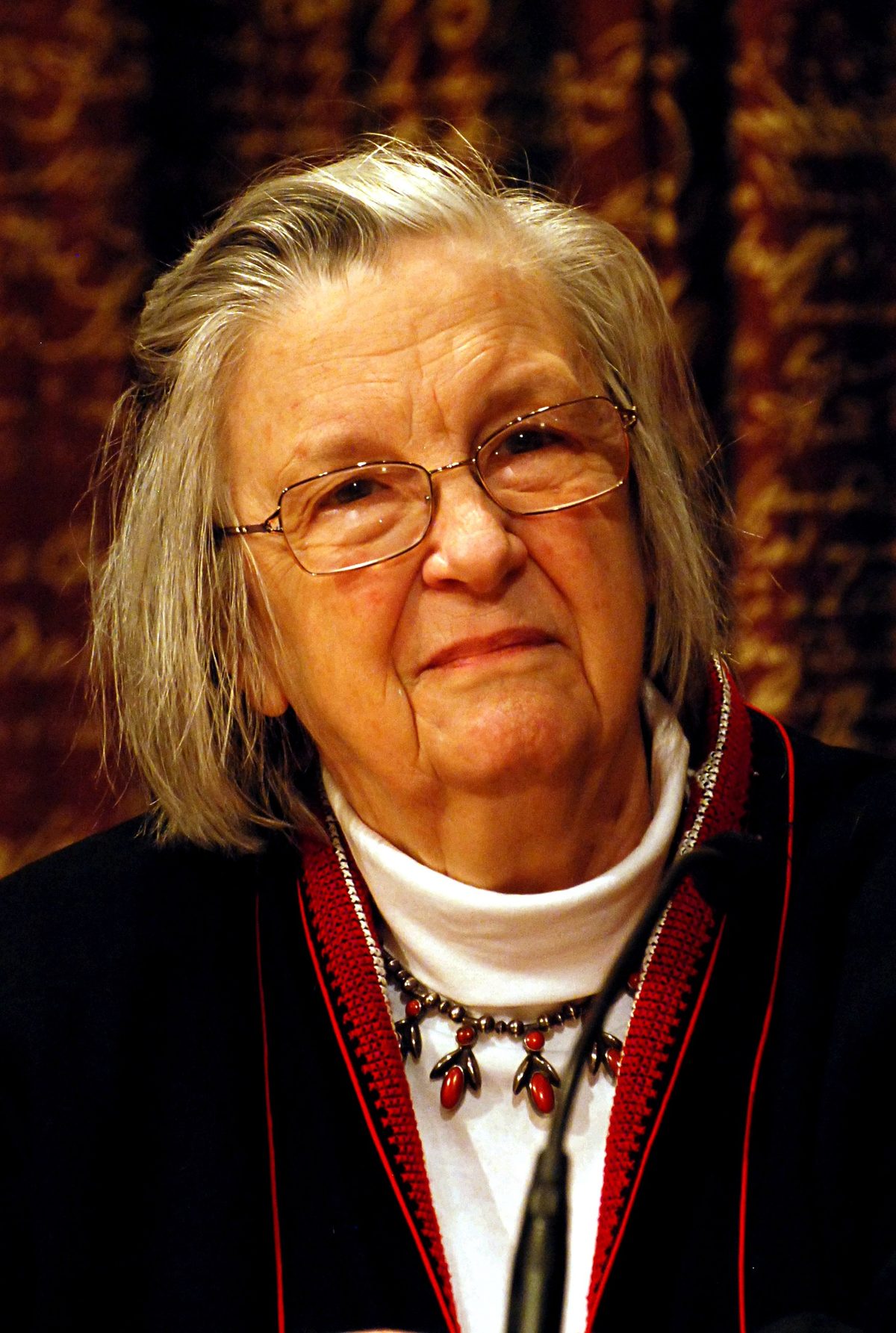
2009
and no woman had ever won it…
Forty-one years after Hardin's parable, Ostrom won the Nobel in economics — the first woman ever to do so. The citation was for her analysis of governance: the demonstration that people can, and regularly do, govern themselves.
2009 Sveriges Riksbank Prize; Ostrom the first woman to win the economics prize.
07 / 08

Elinor who?
the discipline's own reaction…
Economists were baffled. She was a political scientist, and the previous year's laureate admitted he did not know her work. Others asked a fairer question — whether rules that save a Swiss pasture can save an atmosphere.
Krugman and others acknowledged unfamiliarity; scale critique: do design principles extend to global commons?
08 / 08
The tragedy was never the commons
what she actually overturned…
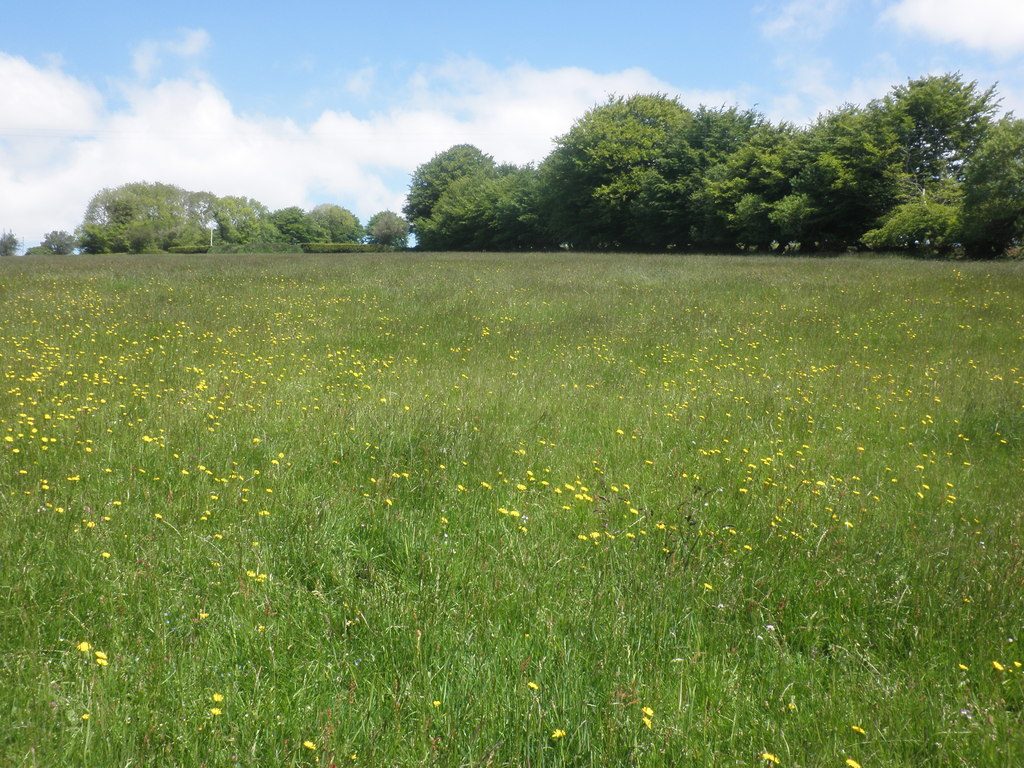
Hardin described open access with nobody in charge and called it a commons. Ostrom showed the difference is everything. Where people can write their own rules, watch each other, and settle disputes cheaply, the tragedy simply does not arrive.
Distinction between open access (res nullius) and governed common property (res communes).
Sources
- Garrett Hardin, 'The Tragedy of the Commons', Science, 1968.
- Ostrom was barred from high-school trigonometry; rejected by UCLA economics; PhD political science 1965.
- Törbel, Valais: communal agreement of 1 February 1483; the winter-feed rule. Ostrom's first case study.
- Tribunal de las Aguas, Valencia: 10th-century origins, meets Thursdays at noon; UNESCO listed 2009.
- Ostrom's eight design principles, Governing the Commons (1990).
- 2009 Sveriges Riksbank Prize; Ostrom the first woman to win the economics prize.
- Krugman and others acknowledged unfamiliarity; scale critique: do design principles extend to global commons?
- Distinction between open access (res nullius) and governed common property (res communes).
Image credits
- Cattle near Anna-Schutzhaus.jpg — Tesla Delacroix, CC BY-SA 4.0 · Commons
- A herd of cattle was grazing in the field.jpg — Stevenndori289, CC0 · Commons
- Nobel Laureate Elinor Ostrom (Economics).jpg — US Embassy Sweden, CC BY 2.0 · Commons
- Stalden Staldenried Törbel (163632501).jpeg — Raphael Andres, CC BY 3.0 · Commons
- The Tribunal de las Aguas of Valencia.jpg — José Jordan, CC BY-SA 3.0 igo · Commons
- Banaue Philippines Batad-Rice-Terraces-02.jpg — CEphoto, Uwe Aranas, CC BY-SA 4.0 · Commons
- Nobel Prize 2009-Press Conference KVA-30.jpg — Holger Motzkau, CC BY-SA 3.0 · Commons
- Top of Atmosphere.jpg — NASA Earth Observatory, Public domain · Commons
- Meadow on Great Common - geograph.org.uk - 4529671.jpg — Roger Cornfoot, CC BY-SA 2.0 · Commons


.jpg)
.jpeg)


More from Nobel Laureates

Nº 01
Auctions
Two economists who didn't study a market. They built one.

Nº 02
Equilibrium
He proved everyone can be doing their best, and everyone can be losing.
Nº 04
Ulcers
Every doctor knew nothing survives stomach acid. One doctor drank the proof.
Nº 05
CRISPR
A footnote in 1987. Rejected by four journals. Now it cures people.
Nº 06
Wormwood
A secret military project. A recipe from the year 340. She took the first dose herself.

Nº 07
Graphene
Physics had proved it could not exist. They found it with sticky tape, on a Friday night.