Nobel Laureates · Nº 06
Wormwood
A secret military project. A recipe from the year 340. She took the first dose herself.
01 / 08
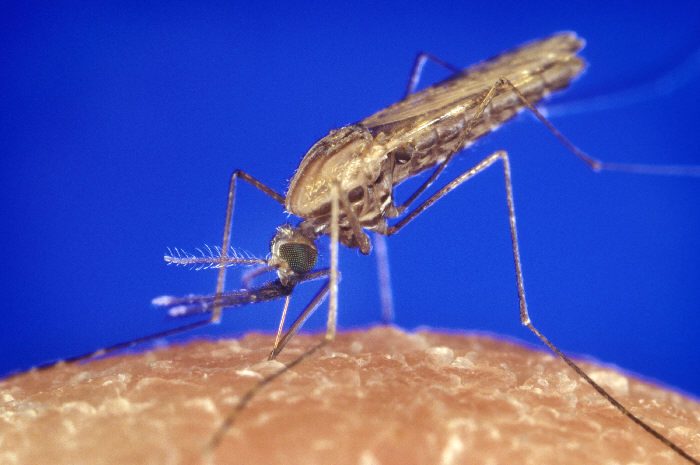
1967
a war, a mosquito, and a secret order…
Ho Chi Minh asked Mao Zedong for help: malaria was killing more North Vietnamese soldiers than American bullets. Beijing set up a classified military programme, named for the day it began — the twenty-third of May, 1967.
Project 523, launched 23 May 1967 after a North Vietnamese request to China; secret military antimalarial programme screening synthetic compounds and traditional remedies.
02 / 08
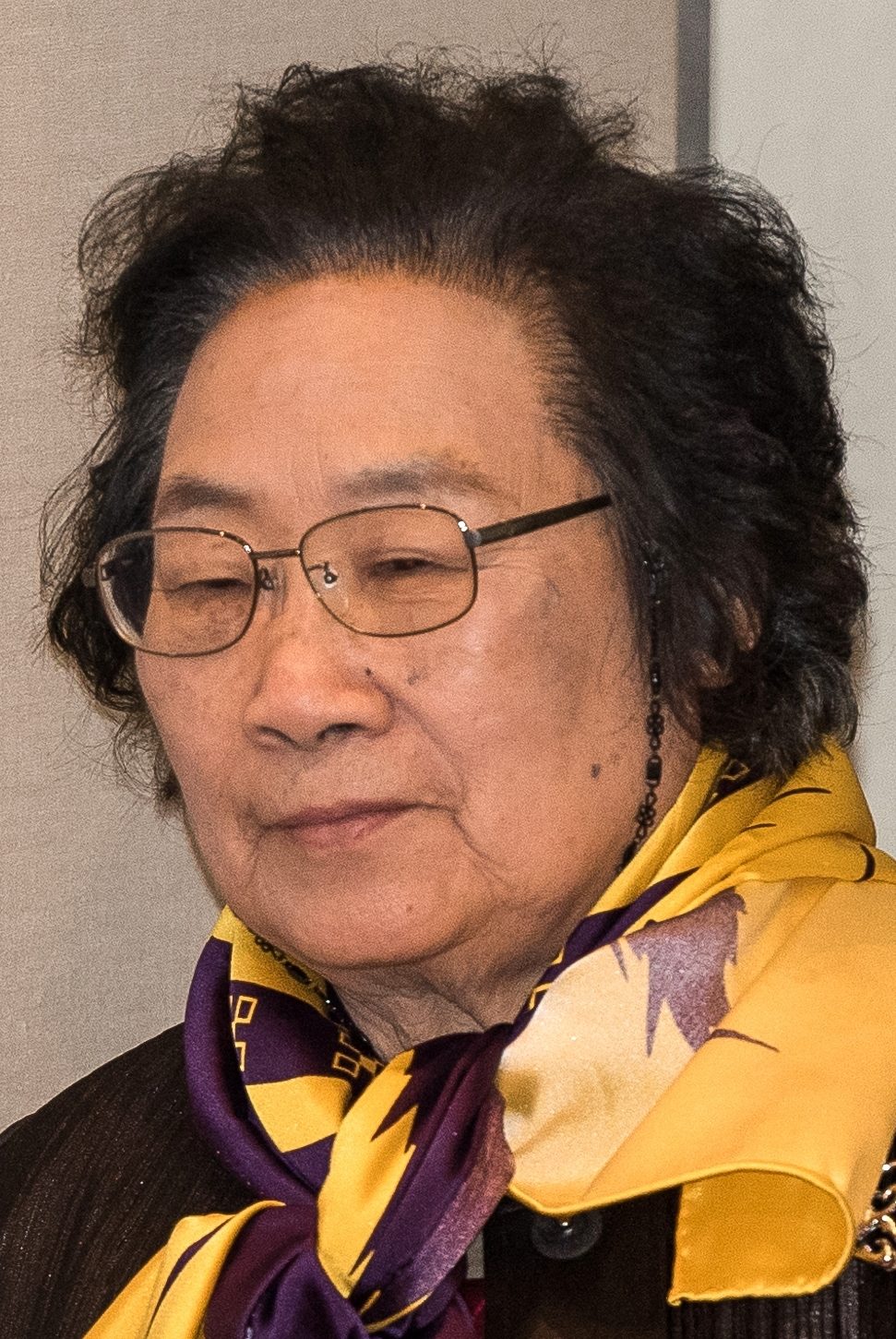
The three noes
what she did not have…
Tu Youyou joined in 1969 and was made a group leader. No doctorate, no training abroad, no seat in the academy — colleagues later called her the three-noes scientist. The Cultural Revolution had closed most laboratories in the country.
Tu joined Project 523 January 1969 as group leader, Institute of Chinese Materia Medica. Known in China as the 'three noes' scientist: no doctorate, no overseas study, no academician title.
03 / 08
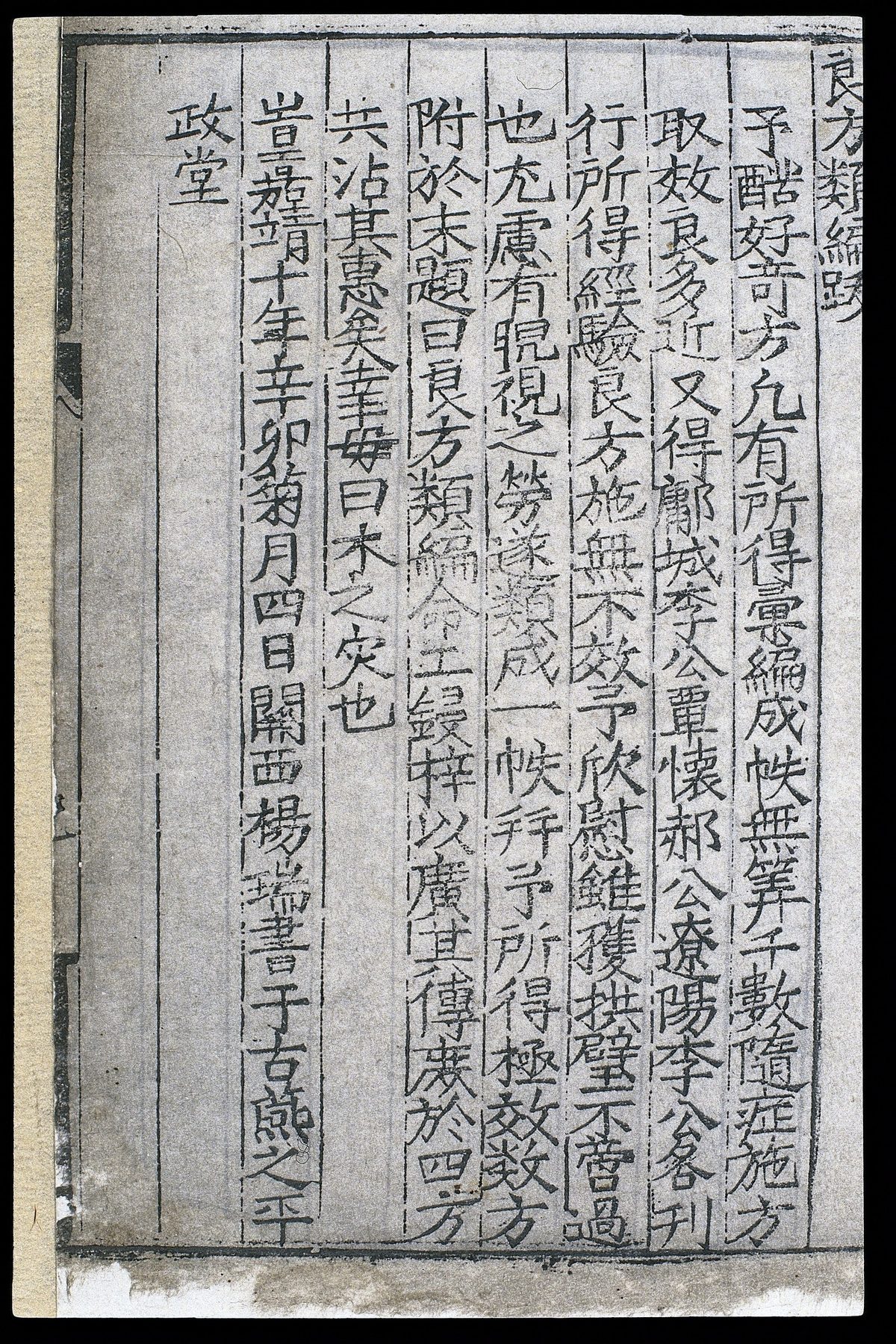
640
recipes, pulled out of old books…
She went to the classical medical literature, and to the practitioners who still used it. From more than two thousand candidate remedies she compiled six hundred and forty worth testing. Then the screening began.
Tu gathered 2,000+ candidate remedies and compiled 640 prescriptions into 'Antimalarial Collections of Recipes and Prescriptions'.
04 / 08
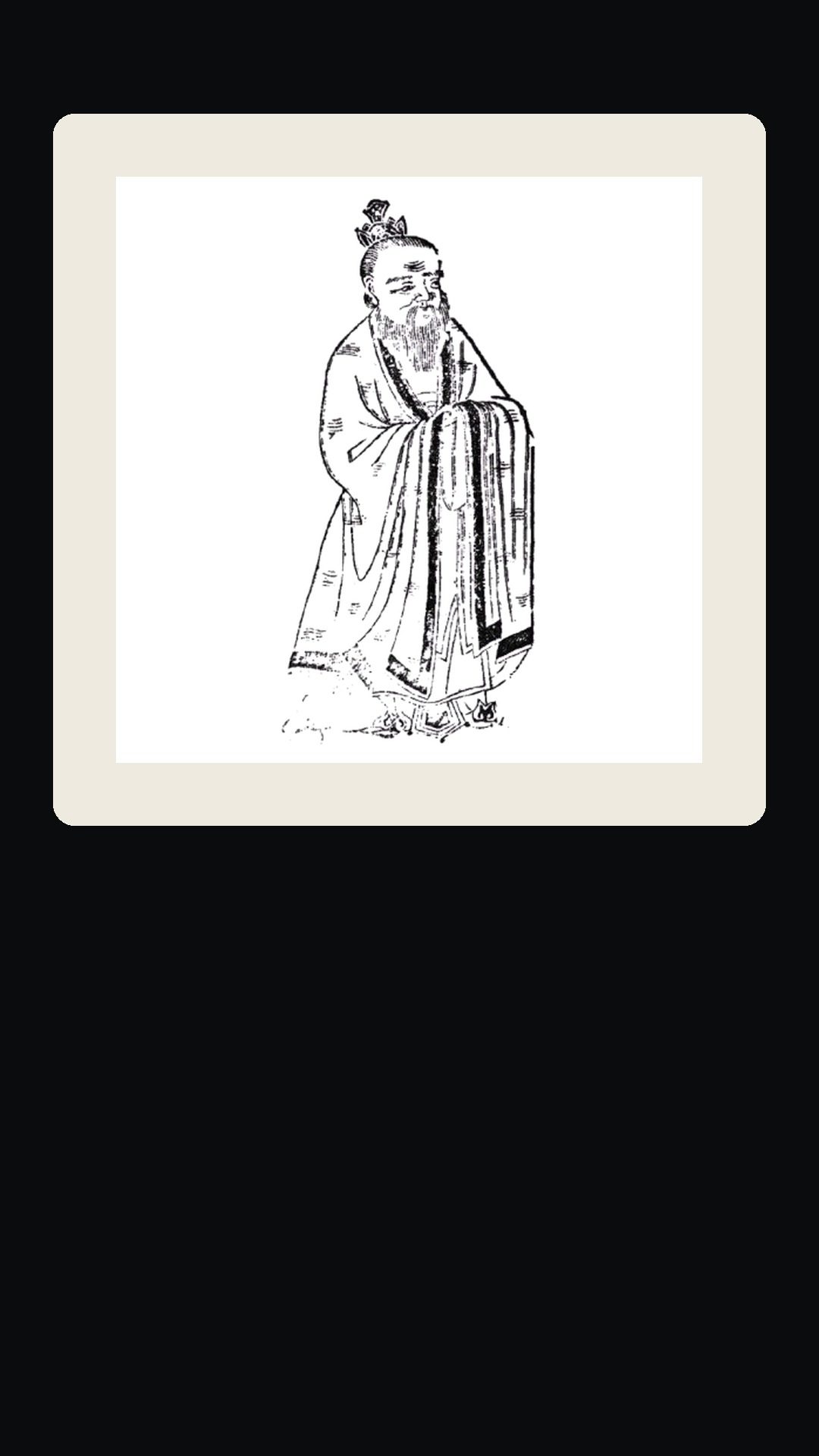
Wring out the juice
four words nobody had taken literally…
Sweet wormwood failed like the rest. So she reread a handbook written by Ge Hong in the fourth century: take a handful, soak it, wring out the juice, drink it. No boiling anywhere. Heat was destroying the compound.
Ge Hong (284–363), 'Handbook of Prescriptions for Emergencies', c. 340 CE. Tu switched to low-temperature ether extraction after the boiled preparation failed.
05 / 08
191
the experiment that finally worked…
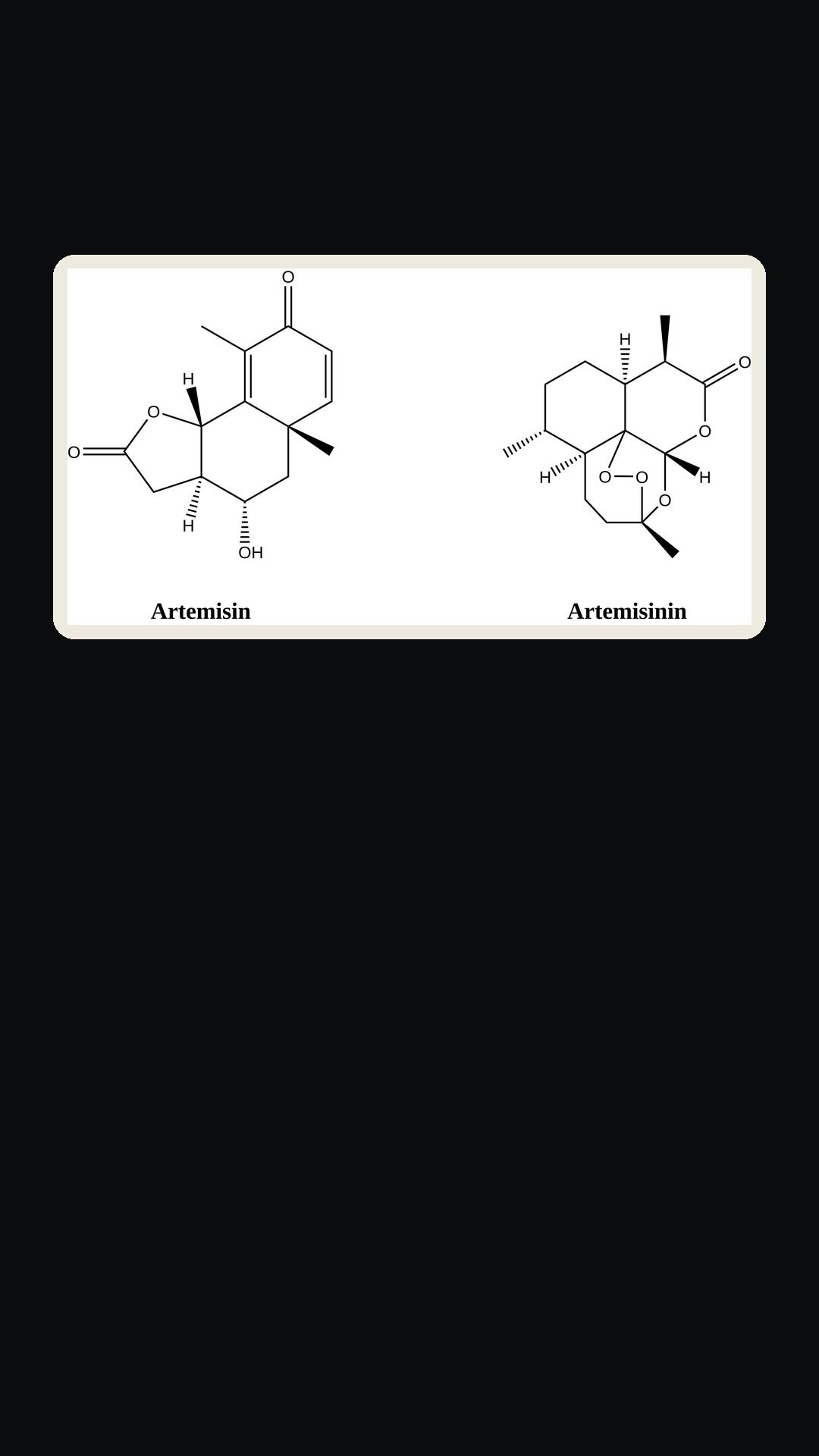
Experiment number one hundred and ninety-one cleared every parasite from the mice. Before any trial in patients, she and two colleagues took the first doses themselves. Then Hainan: twenty-one people treated, twenty-one recovered.
Experiment No. 191 (Artemisia annua), 100% parasite inhibition, reported 8 March 1972. Tu and two colleagues were the first human volunteers; 21 patients subsequently treated in Hainan, all recovered.
06 / 08
1979
the paper that carried no name at all…
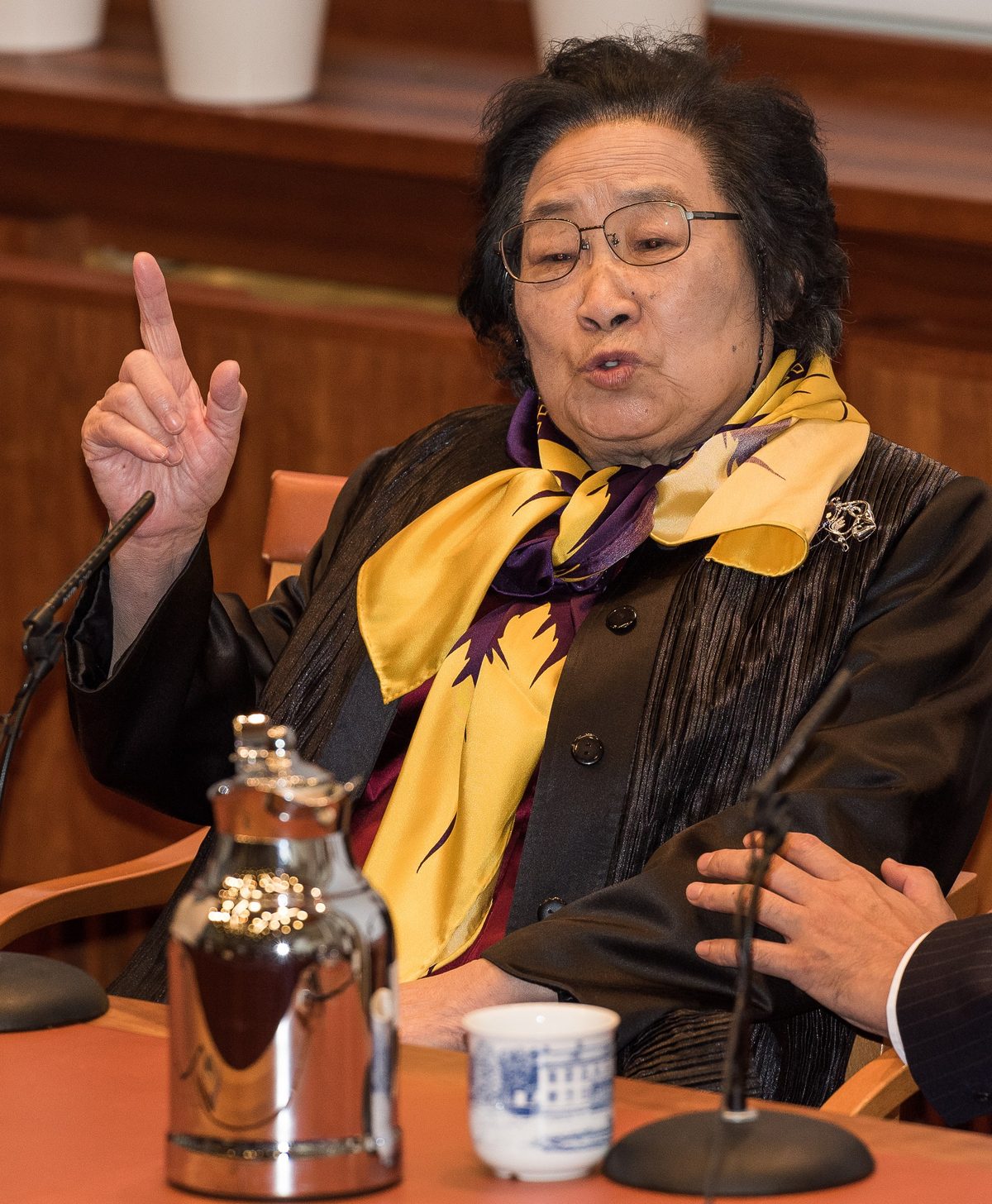
The results went out under a committee name. No authors listed. She stayed anonymous for over twenty years, until two researchers at America's National Institutes of Health went back through the record in 2011 and worked out who had done it.
1979 Chinese Medical Journal paper published under 'Qinghaosu Antimalaria Coordinating Research Group', no named authors. Louis Miller and Xinzhuan Su (NIH) identified Tu as the discoverer, 2011; Lasker Award 2011; Nobel 2015, aged 84.
07 / 08
It is starting to fail
the parasite is answering back…
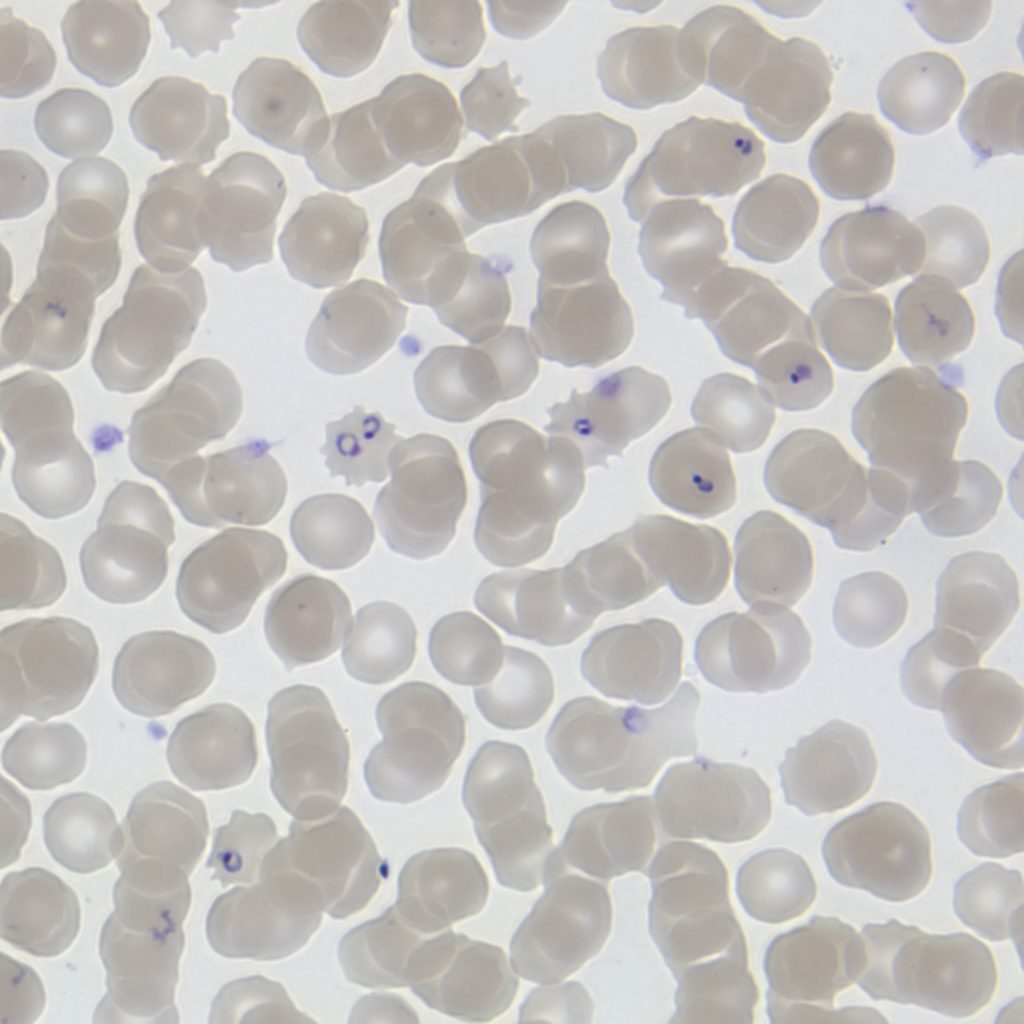
Malaria is evolving around the drug. Partial resistance spread across Southeast Asia over two decades, and has now appeared in East Africa on the same trajectory. Several countries report it working less than ninety per cent of the time.
Artemisinin partial resistance (kelch13 mutations) widespread in SE Asia; emerged in East Africa by 2024. ACT efficacy below 90% reported in Angola, DRC, Burkina Faso, Uganda, Tanzania.
08 / 08

7.6M lives
and nobody ever owned it…
China had no patent system in the nineteen-seventies, so the work went out under a collective name and into the world unowned. The World Health Organization estimates it has saved about seven point six million lives since the year two thousand.
China's patent law took effect 1 April 1985; 1970s artemisinin work was published collectively with no IP protection. WHO: ~7.6 million lives saved and ~1.5 billion cases averted via ACTs since 2000.
Sources
- Project 523, launched 23 May 1967 after a North Vietnamese request to China; secret military antimalarial programme screening synthetic compounds and traditional remedies.
- Tu joined Project 523 January 1969 as group leader, Institute of Chinese Materia Medica. Known in China as the 'three noes' scientist: no doctorate, no overseas study, no academician title.
- Tu gathered 2,000+ candidate remedies and compiled 640 prescriptions into 'Antimalarial Collections of Recipes and Prescriptions'.
- Ge Hong (284–363), 'Handbook of Prescriptions for Emergencies', c. 340 CE. Tu switched to low-temperature ether extraction after the boiled preparation failed.
- Experiment No. 191 (Artemisia annua), 100% parasite inhibition, reported 8 March 1972. Tu and two colleagues were the first human volunteers; 21 patients subsequently treated in Hainan, all recovered.
- 1979 Chinese Medical Journal paper published under 'Qinghaosu Antimalaria Coordinating Research Group', no named authors. Louis Miller and Xinzhuan Su (NIH) identified Tu as the discoverer, 2011; Lasker Award 2011; Nobel 2015, aged 84.
- Artemisinin partial resistance (kelch13 mutations) widespread in SE Asia; emerged in East Africa by 2024. ACT efficacy below 90% reported in Angola, DRC, Burkina Faso, Uganda, Tanzania.
- China's patent law took effect 1 April 1985; 1970s artemisinin work was published collectively with no IP protection. WHO: ~7.6 million lives saved and ~1.5 billion cases averted via ACTs since 2000.
Image credits
- Artemisia annua kz06.jpg — Krzysztof Ziarnek, Kenraiz, CC BY-SA 4.0 · Commons
- Anopheles gambiae mosquito feeding 1354.p lores.jpg — Content Providers(s): CDC/James Gathany, Public domain · Commons
- D810 4987 Tu Youyou, medicine (22945001843) (cropped).jpg — Bengt Nyman from Vaxholm, Sweden, CC BY 2.0 · Commons
- C15 Chinese prescription book Wellcome L0039616.jpg — Unknown, CC BY 4.0 · Commons
- Ge Hong Woodcut Portrait.png — Itstartswithanerveblock, CC0 · Commons
- Chemical structures of artemisinin and artemisin .svg — Swift Science Editor, CC BY-SA 4.0 · Commons
- Tu Youyou 5056-2015.jpg — Bengt Nyman, CC BY-SA 4.0 · Commons
- Plasmodium falciparum (malaria) parasite in blood.jpg — MichaelZahniser, Public domain · Commons
- Net Distribution In Mwanza, Tanzania 2016 (31570873060).jpg — President's Malaria Initiative, Public domain · Commons


_(cropped).jpg)


_parasite_in_blood.jpg)
.jpg)
More from Nobel Laureates
Nº 01
Auctions
Two economists who didn't study a market. They built one.

Nº 02
Equilibrium
He proved everyone can be doing their best, and everyone can be losing.
Nº 03
Commons
Economics said shared land must die. She went and looked.
Nº 04
Ulcers
Every doctor knew nothing survives stomach acid. One doctor drank the proof.
Nº 05
CRISPR
A footnote in 1987. Rejected by four journals. Now it cures people.

Nº 07
Graphene
Physics had proved it could not exist. They found it with sticky tape, on a Friday night.