Periodic Tales · Nº 03
Helium
Found in the Sun twenty-seven years before anyone found it on Earth.
01 / 08
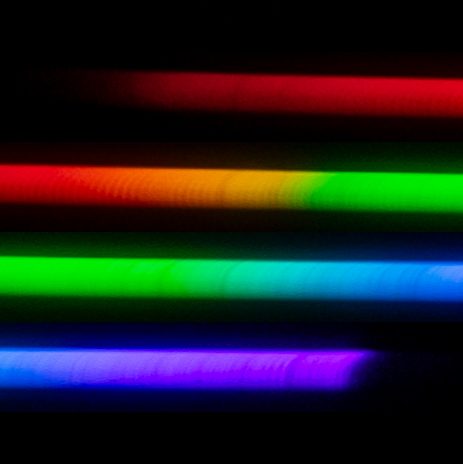
1868
a yellow line that belonged to nothing…
During an eclipse, astronomers split the light of the Sun's edge and found a yellow line matching no element anyone had. Norman Lockyer decided it must be something new, and named it after the star it came from. The only element discovered in space first.
Pierre Janssen observed the D3 line (587.49 nm) during the total eclipse of 18 August 1868; Norman Lockyer independently identified it and named the element after Helios.
02 / 08
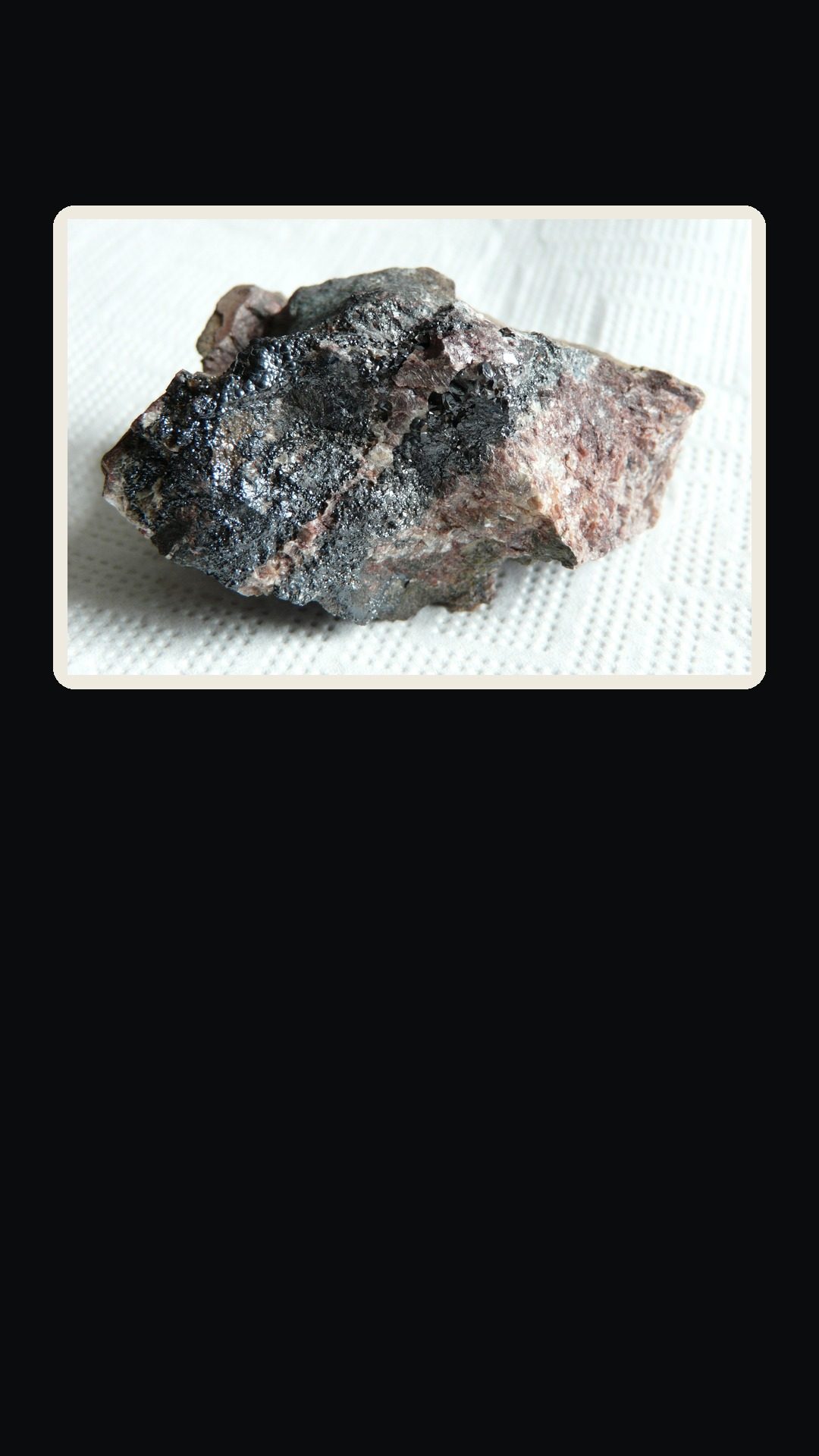
It is what uranium leaves behind
twenty-seven years later, in a rock…
Ramsay got his in 1895 by dissolving a uranium mineral, and that is the whole mechanism. A decaying uranium atom throws out an alpha particle. An alpha particle is a helium nucleus. Give it two electrons and you have helium gas. Almost all of Earth's helium is uranium falling apart.
Ramsay isolated terrestrial helium from cleveite in 1895; Cleve and Langlet independently the same year. Alpha decay of uranium and thorium emits He-4 nuclei, which acquire electrons and accumulate as helium gas in reservoirs. Commercially extracted helium is radiogenic; a small primordial He-3 component exists in the deep mantle.
03 / 08
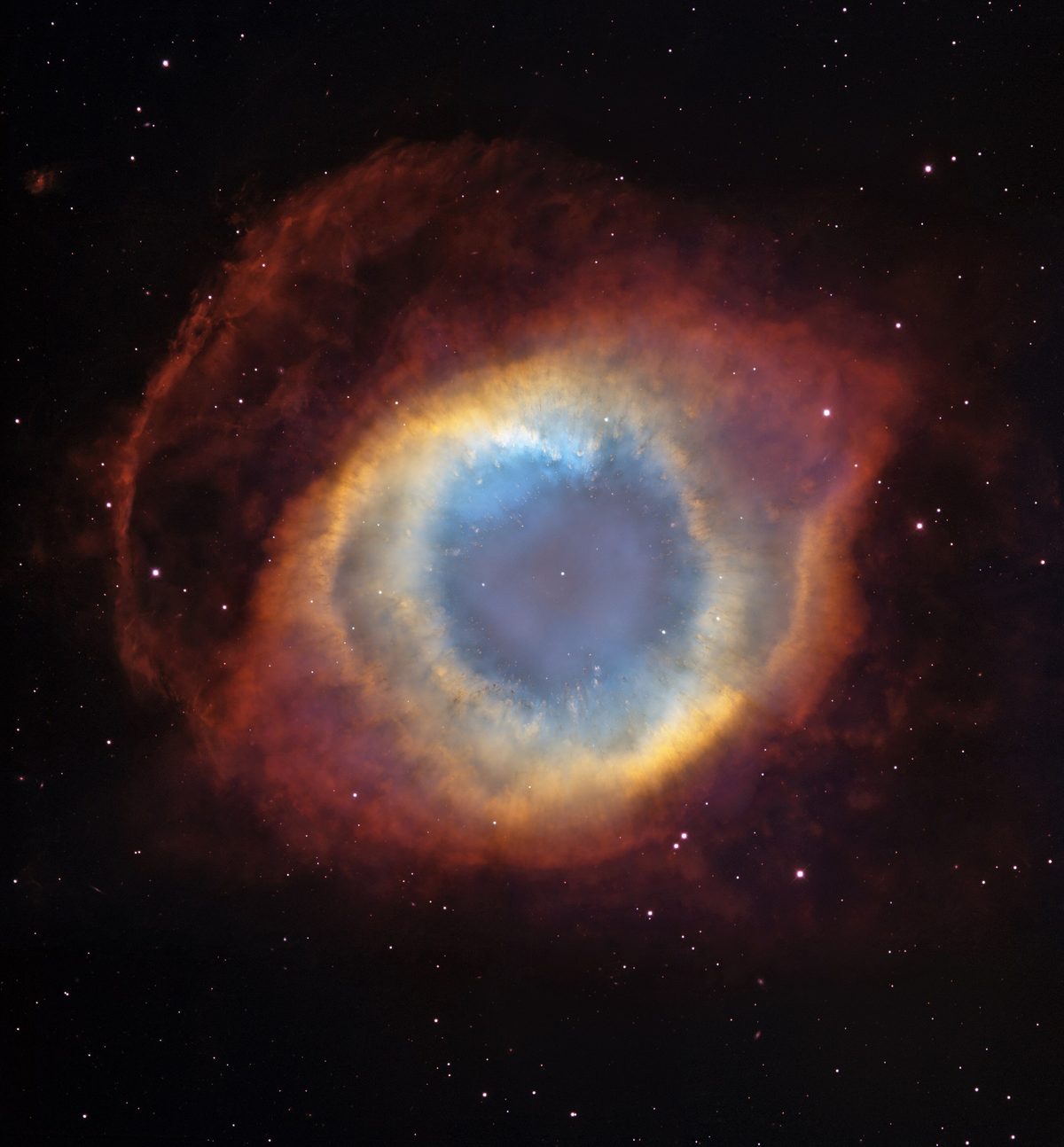
24% of everything
and almost none of it is here…
About a quarter of all ordinary matter in the universe is helium, nearly all of it made in the first twenty minutes after the Big Bang. The second most common thing there is, and one of the scarcest substances on Earth.
Big Bang nucleosynthesis produced ~24% of baryonic mass as helium-4 within ~20 minutes. Helium is ~5.2 ppm of Earth's atmosphere.
04 / 08
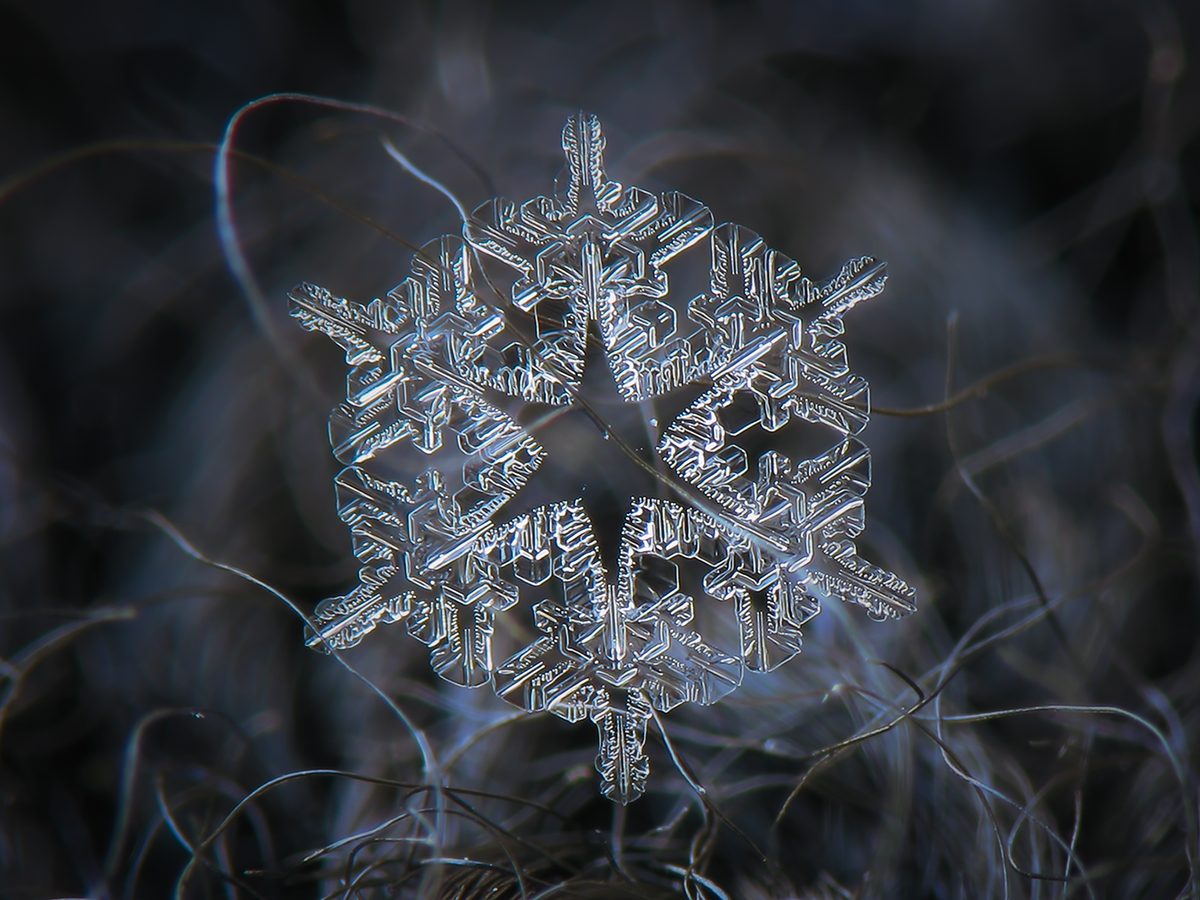
It refuses to freeze
even at the bottom of the temperature scale…
Cool anything else far enough and it becomes a solid. Helium does not. At ordinary pressure it stays liquid all the way to absolute zero, because its own quantum jitter never stops. It takes twenty-five atmospheres to force it to hold still.
Helium-4 is the only element that does not solidify at atmospheric pressure at 0 K; ~25 atm is required. Zero-point motion prevents crystallisation.
05 / 08
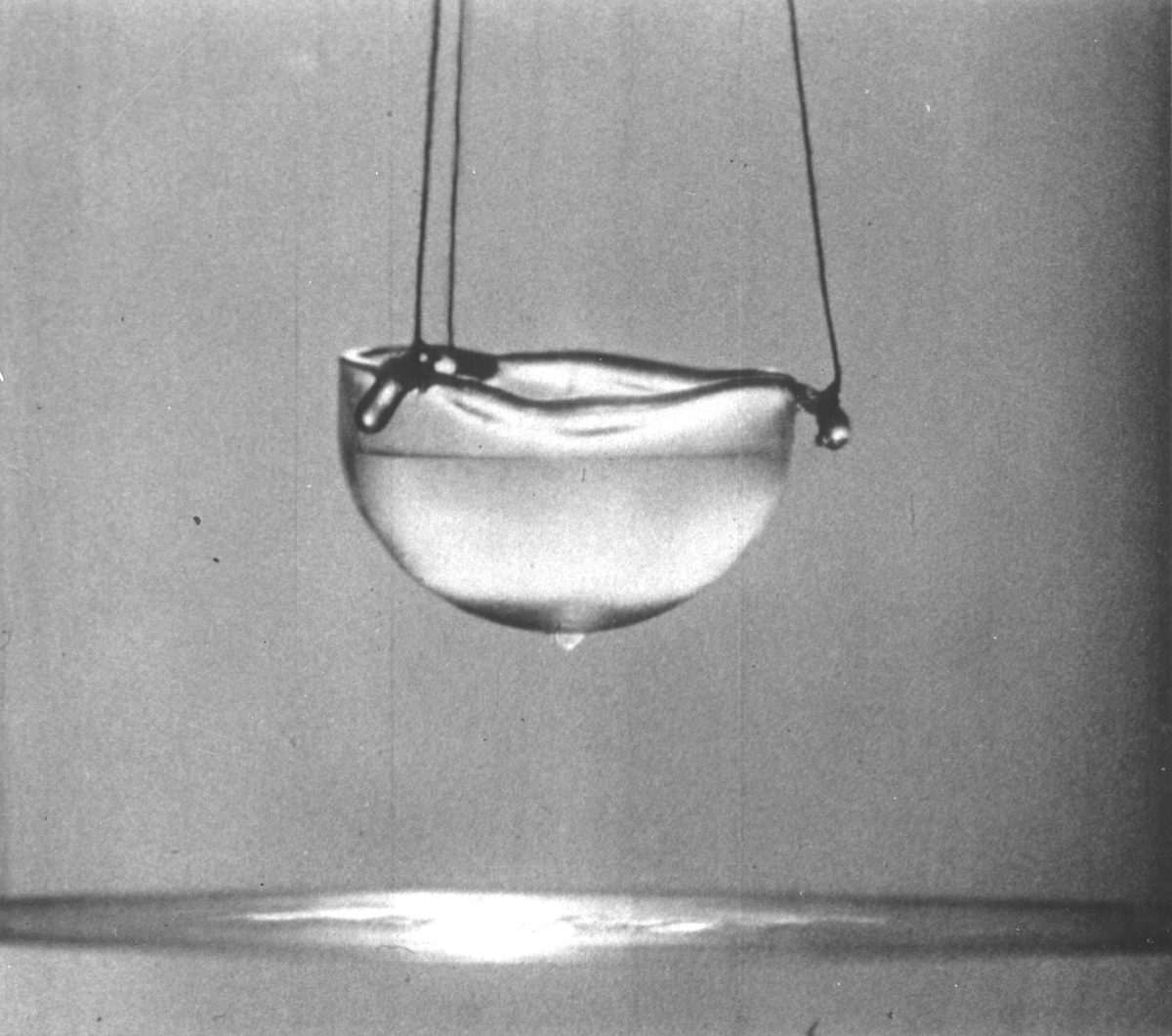
2.17 kelvin
below this it stops behaving like a liquid…
Two point one seven degrees above absolute zero, helium becomes a superfluid with no viscosity at all. It creeps up the inside of a beaker in a film a few atoms thick, over the rim, and drips off the bottom until it is empty.
Below the lambda point (2.17 K) helium-4 becomes superfluid He-II: zero viscosity, Rollin film creep over container walls, flow through sub-nanometre pores.
06 / 08
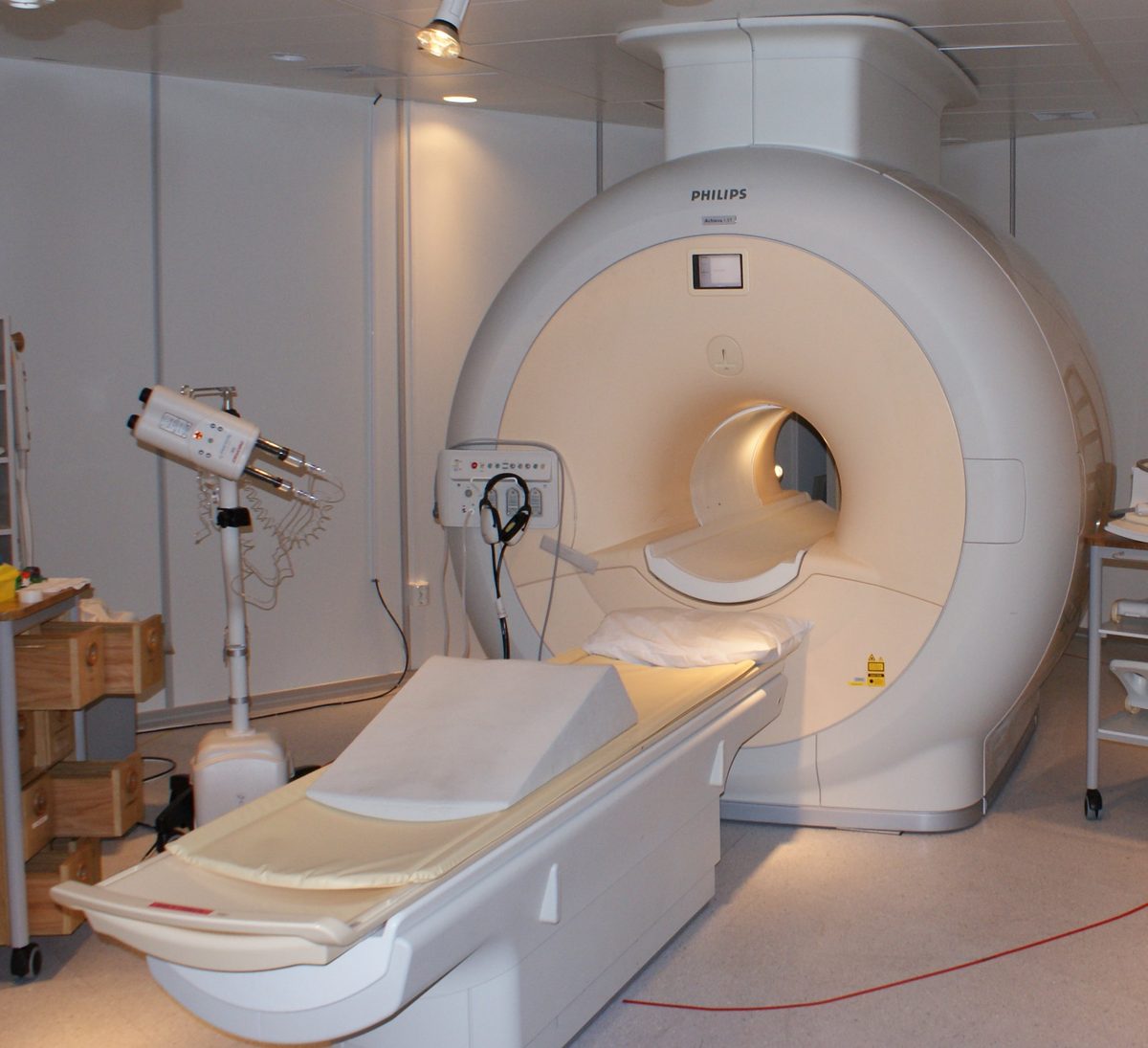
The machine you lie inside
what it is actually spent on…
An MRI scanner holds fifteen hundred to two thousand litres of liquid helium, because its magnets only work colder than deep space. It boils away a few per cent every month. There is no substitute.
A whole-body MRI system contains ~1,500–2,000 L of liquid helium at 4.2 K, with ~3–4% monthly boil-off. No alternative coolant reaches these temperatures.
07 / 08

5.2 parts per million
and then it is gone for good…
Helium is the one element we can genuinely lose. Too light for the Earth to hold, so anything reaching open air drifts up and off into space. Not buried, not recycled — gone. Most gas wells containing it simply vent it.
Atmospheric helium ~5.2 ppm; low atomic mass permits thermal escape from the exosphere. Extraction is generally uneconomic below ~0.3% helium by volume, so most is vented.
08 / 08

Then they sold the reserve
and some of it went into balloons…
America built a national helium store under Texas in nineteen twenty-five and refused to export it — which is why the Hindenburg was flying on hydrogen. In twenty twenty-four the reserve was sold off. We still fill party balloons with it.
US National Helium Reserve established 1925 (Bush Dome, Amarillo, Texas); export barred under the Helium Control Act 1927. Federal reserve sold to a private buyer, January 2024. Helium prices up several hundred per cent since 2000.
Sources
- Pierre Janssen observed the D3 line (587.49 nm) during the total eclipse of 18 August 1868; Norman Lockyer independently identified it and named the element after Helios.
- Ramsay isolated terrestrial helium from cleveite in 1895; Cleve and Langlet independently the same year. Alpha decay of uranium and thorium emits He-4 nuclei, which acquire electrons and accumulate as helium gas in reservoirs. Commercially extracted helium is radiogenic; a small primordial He-3 component exists in the deep mantle.
- Big Bang nucleosynthesis produced ~24% of baryonic mass as helium-4 within ~20 minutes. Helium is ~5.2 ppm of Earth's atmosphere.
- Helium-4 is the only element that does not solidify at atmospheric pressure at 0 K; ~25 atm is required. Zero-point motion prevents crystallisation.
- Below the lambda point (2.17 K) helium-4 becomes superfluid He-II: zero viscosity, Rollin film creep over container walls, flow through sub-nanometre pores.
- A whole-body MRI system contains ~1,500–2,000 L of liquid helium at 4.2 K, with ~3–4% monthly boil-off. No alternative coolant reaches these temperatures.
- Atmospheric helium ~5.2 ppm; low atomic mass permits thermal escape from the exosphere. Extraction is generally uneconomic below ~0.3% helium by volume, so most is vented.
- US National Helium Reserve established 1925 (Bush Dome, Amarillo, Texas); export barred under the Helium Control Act 1927. Federal reserve sold to a private buyer, January 2024. Helium prices up several hundred per cent since 2000.
Image credits
- Solar eclipse 1999 4.jpg — Luc Viatour, CC BY-SA 3.0 · Commons
- Eclipse Fraunhofer lines.jpg — Jhmadden, CC BY 4.0 · Commons
- Uraninite w11.JPG — Weirdmeister, CC BY-SA 4.0 · Commons
- NGC7293 (2004).jpg — The HST data are from proposal 9700. Processed images may be obtained from the Helix MAST web site. The Hubble Helix Team includes M. Meixner, H.E. Bond, G. Chapman (STScI), Y.-H. Chu (U. Illinois, Urbana-Champaign), P. Cox (Institut d'Astrophysique Spatiale, France), W. Crothers, L.M. Frattare, R.Gilliland (STScI), M. Guerrero R. Gruendl (U. Illinois, Urbana-Champaign), F. Hamilton, (STScI), R.Hook (STScI/ESO), P. Huggins (New York Univ.), I. Jordan, C.D. Keyes, A. Koekemoer (STScI), K.Kwitter (Williams College), Z.G. Levay, P.R. McCullough, M. Mutchler, K. Noll (STScI), C.R. O'Dell (Vanderbilt University), N. Panagia, M. Reinhart, M. Robberto, K. Sahu, D. Soderblom, L. Stanghellini, C. Tyler, J. Valenti, A. Welty, R. Williams (STScI). The CTIO data were taken by C.R. O'Dell (Vanderbilt University) and L.M. Frattare (STScI). The science team includes C.R. O'Dell (Vanderbilt University), P.R. McCullough and M. Meixner (STScI)., Public domain · Commons
- Snowflake 2023-01-08 5774-84 - Flickr - Alexey Kljatov.jpg — Alexey Kljatov, CC BY 2.0 · Commons
- Liquid helium Rollin film.jpg — I, AlfredLeitner, took this photograph as part of my movie "Liquid Helium,Superfluid", Public domain · Commons
- MRI-Philips.JPG — Jan Ainali, CC BY 3.0 · Commons
- Refinery.jpg — isakarakus, CC0 · Commons
- 13th birthday balloons.jpg — Islahaddow, CC BY-SA 4.0 · Commons


.jpg)


More from Periodic Tales

Nº 01
Phosphorus
Element 15. It builds every living thing, and it burns everything it touches.

Nº 02
Hydrogen
The first atom there ever was. Nine out of ten still are.
Nº 04
Lithium
Third element ever made. In your phone, in the bomb, and in the medicine cabinet.
Nº 05
Beryllium
Light enough to fly a space telescope, sweet enough to taste, and one of the deadliest metals to breathe.
Nº 06
Boron
Made only by cosmic rays, then hidden everywhere: in reactor rods, bulletproof plates, and every computer chip.
Nº 07
Carbon
You are 18% carbon — the same element as the diamond, the pencil, a silent killer, and the blackest black ever made.