By The Numbers · Nº 06
Concrete
We made it stronger by putting steel in it, and gave it an expiry date.
01 / 08
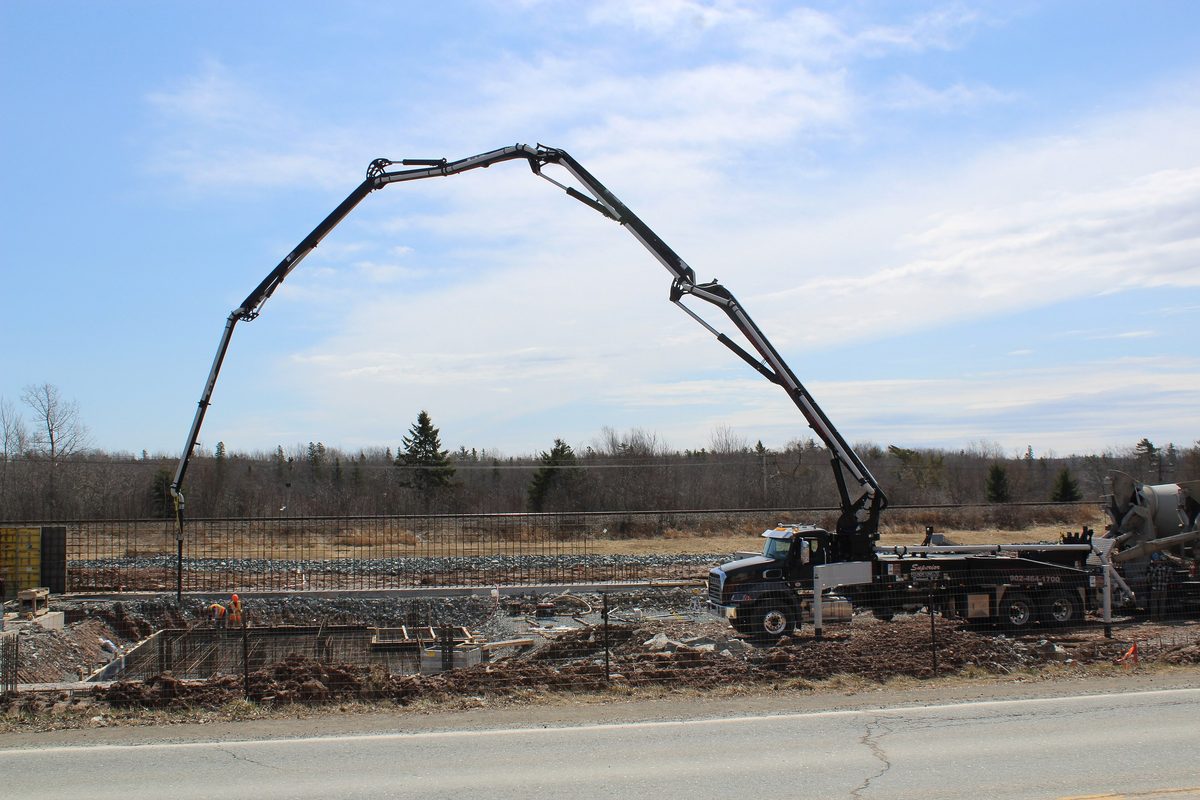
30 billion tonnes a year
and only water beats it…
Concrete is the second most consumed substance on Earth, after water. More than thirty billion tonnes are poured every year — over three tonnes for every person alive. Nothing else we make is produced at anything close to that scale.
Concrete is the most-used man-made material and second most-consumed substance globally after water; annual production exceeds 30 billion tonnes, more than 3 tonnes per person.
02 / 08
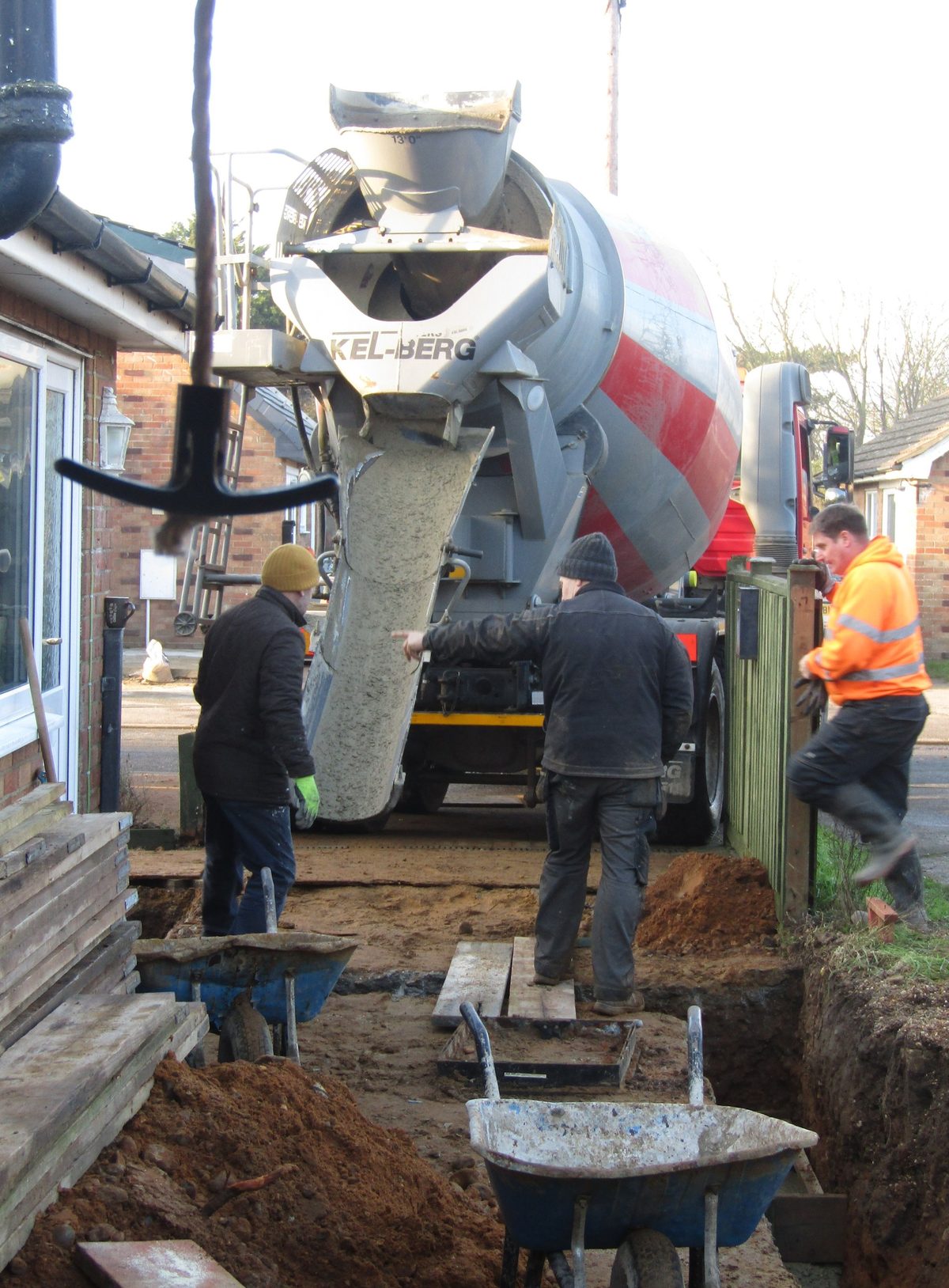
It does not dry
which is the first thing people get wrong…
Concrete hardens by a chemical reaction, not evaporation. Calcium silicates take up water and grow interlocking crystal needles right through the mix, giving off heat as they go. Mud dries out. Concrete assembles itself.
Hydration is exothermic: calcium silicates react with water to form interlocking calcium-silicate-hydrate (C-S-H) needles. Curing is a chemical reaction, not drying.
03 / 08
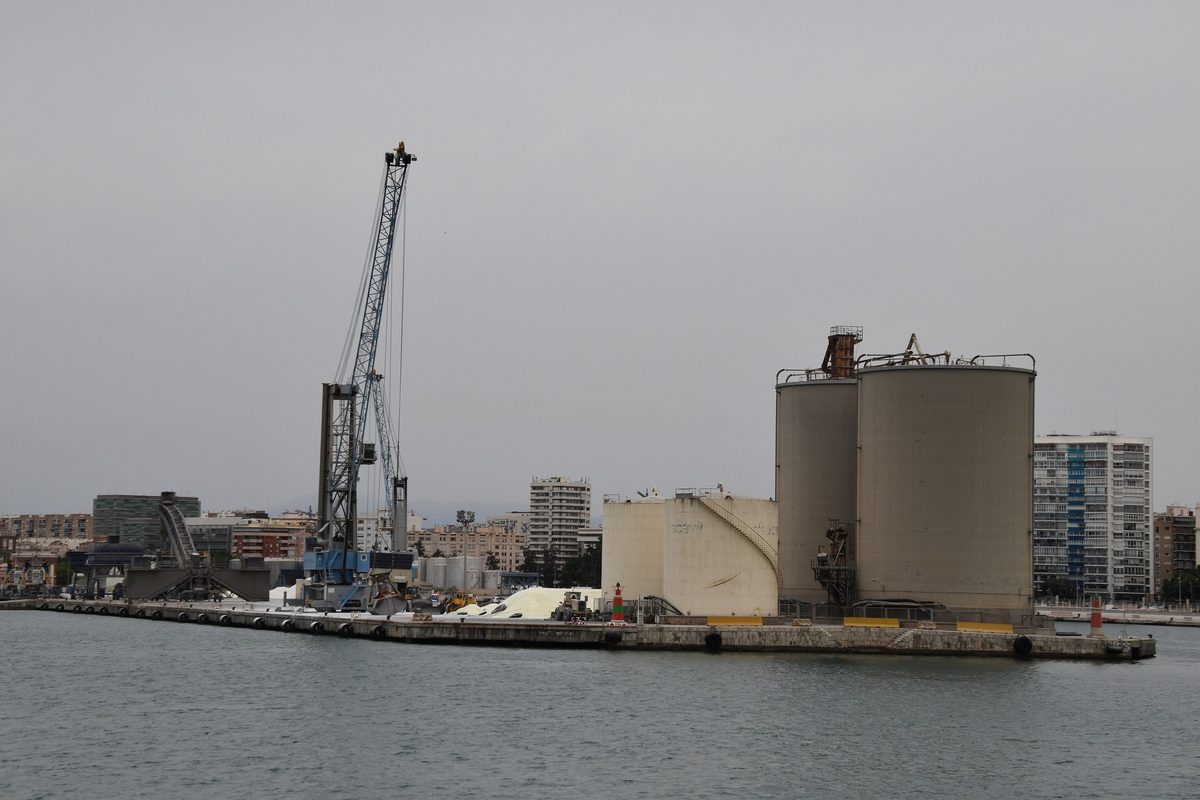
8% of global CO2
and half of it is not the furnace…
Making cement means heating limestone past nine hundred degrees, which strips the carbon straight out of the rock. More than half the emissions are that reaction rather than the fuel. Cement is around eight per cent of global carbon dioxide.
Calcination of limestone above ~900°C releases CO2 as a direct chemical product of making quicklime, accounting for over half of cement's footprint. Cement and concrete production is around 8% of global CO2 emissions.
04 / 08
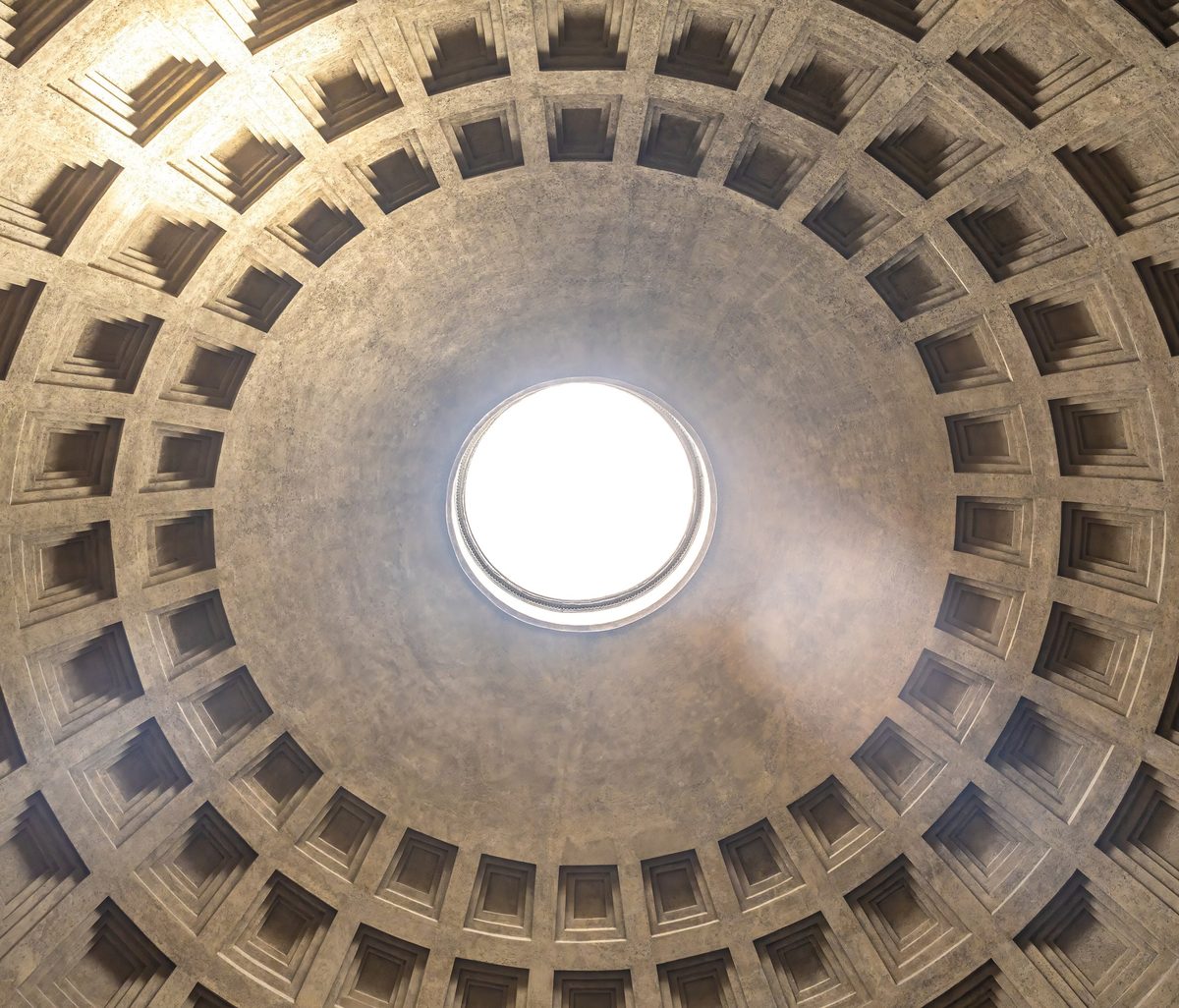
Standing since 128 AD
and nobody has beaten it since…
The Pantheon's dome has held for nineteen centuries, forty-three metres across, still the largest unreinforced concrete dome anywhere. The Romans lightened the mix as they climbed, finishing in volcanic pumice at the crown.
The Pantheon dome, completed c. 128 AD, spans 43.3 m and remains the largest unreinforced concrete dome in the world. Aggregate grades from heavier material at the base to lightweight pumice at the oculus.
05 / 08
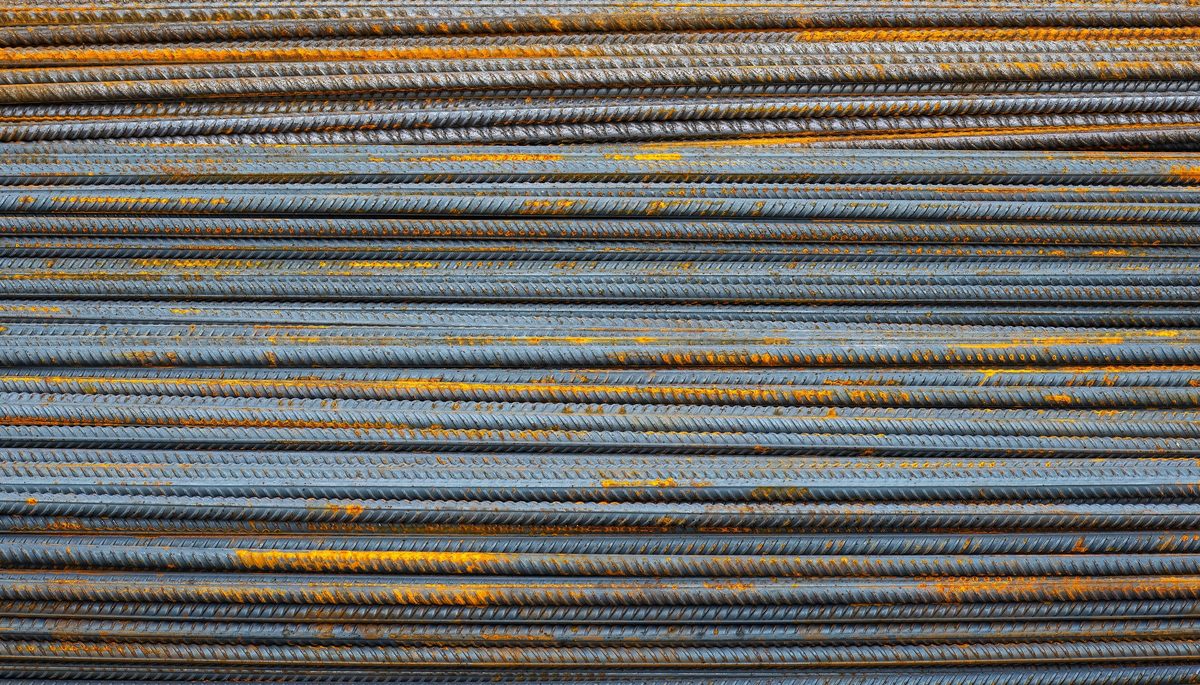
4 megapascals
against forty the other way…
Concrete takes about forty megapascals of crushing before it fails, and about four of pulling. One tenth. It is superb at being sat on and close to useless at being stretched, which is why nothing tall is made of concrete alone.
Typical structural concrete: ~40 MPa compressive strength against ~4 MPa tensile strength, roughly a 10:1 ratio. Tensile weakness is the reason for reinforcement.
06 / 08
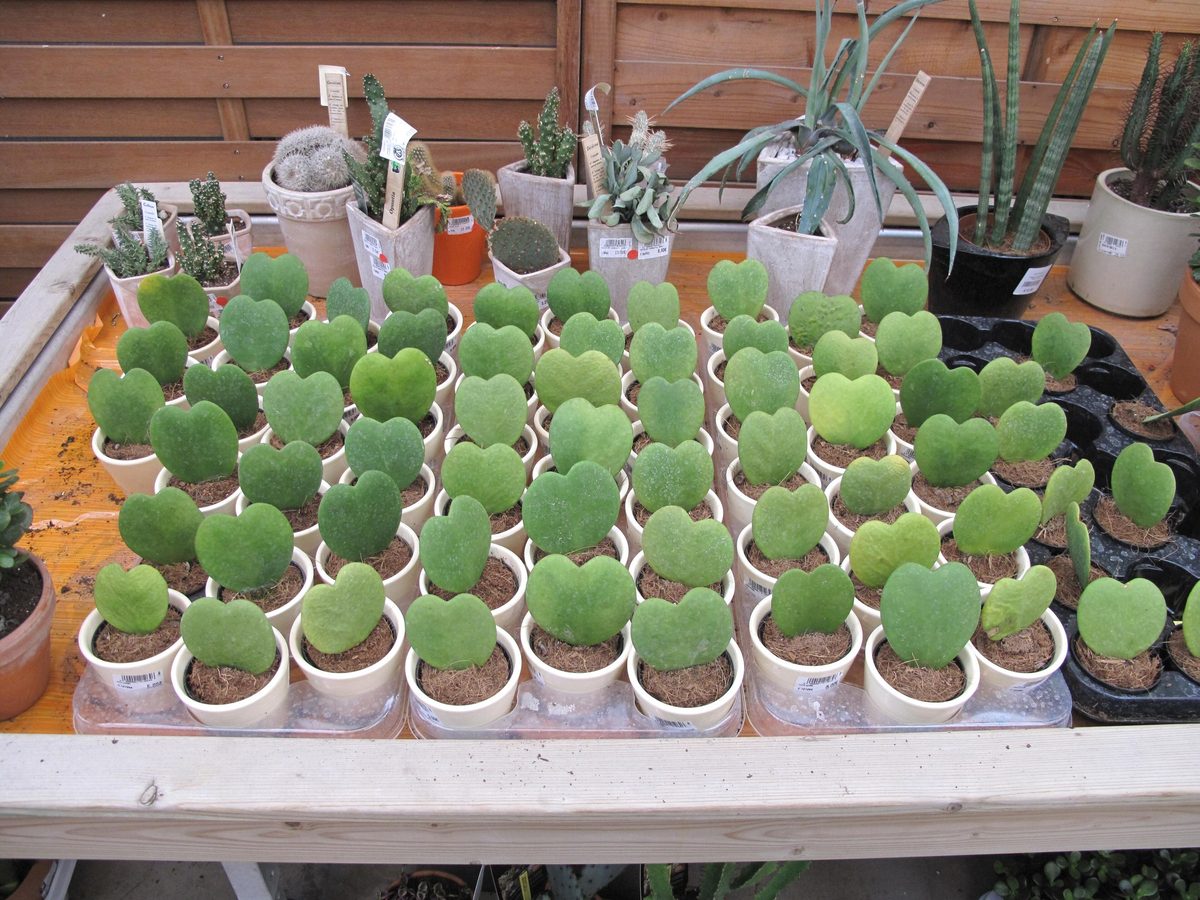
A gardener wanted better flowerpots
and the reason it works is a coincidence…
Joseph Monier, a French gardener, needed pots that survived shipping, so in eighteen sixty-seven he set iron mesh into cement. Reinforced concrete works at all because of a fluke: steel and concrete expand with heat at almost exactly the same rate.
Joseph Monier patented reinforced concrete in 1867, developed for planters. Steel and concrete have near-identical coefficients of thermal expansion (~12 x 10^-6 /K), so they do not shear apart under temperature change.
07 / 08
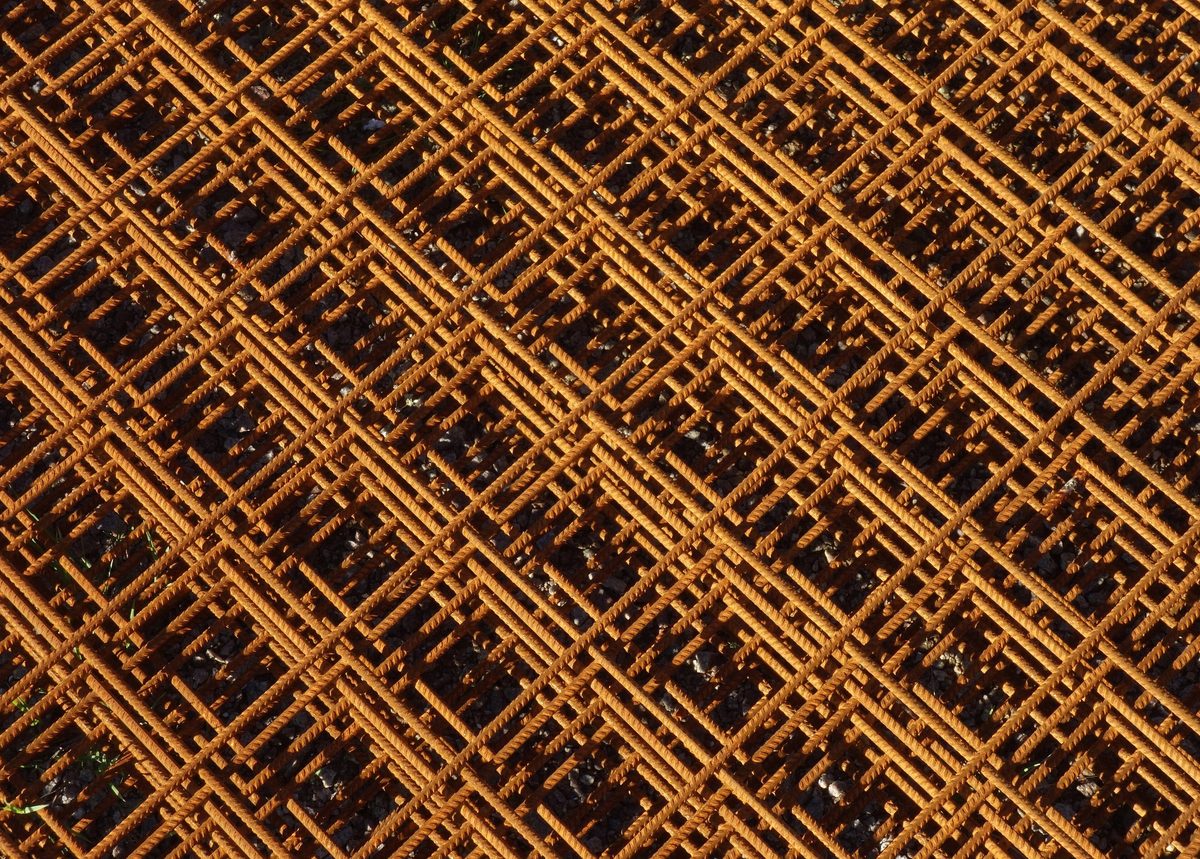
600% by volume
which is the whole problem…
Carbon dioxide works in and lowers the pH inside the concrete, the steel starts to rust, and rust occupies six times the volume of the metal it came from. The reinforcement that made the structure strong then breaks it apart from the inside.
Carbonation lowers concrete pore pH and depassivates embedded steel. Corrosion products occupy up to about six times the volume of the original steel, spalling the surrounding concrete. Reinforced structures are typically designed for 50-100 year service lives.
08 / 08
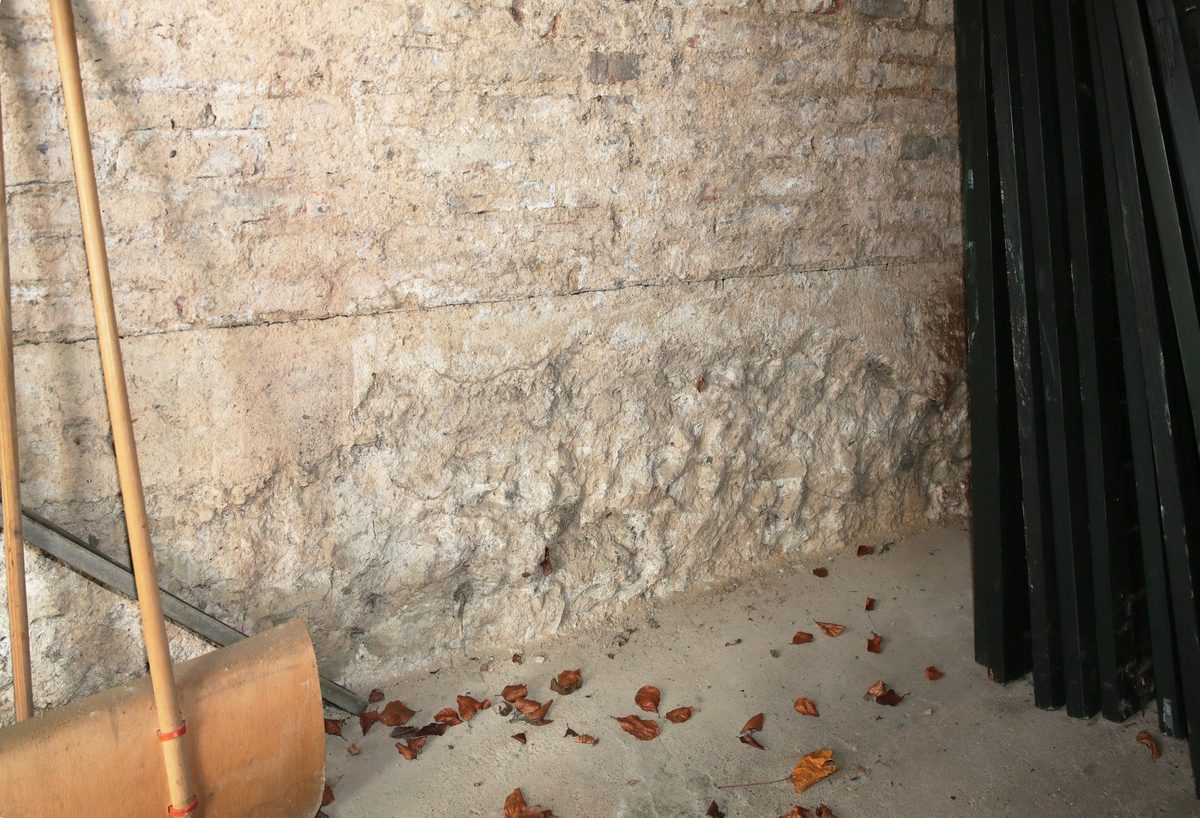
The Romans left the lumps in
and it was never sloppiness…
For centuries the white lumps in Roman concrete were read as careless mixing. In twenty twenty-three they turned out to be the mechanism: a crack splits a lump, water gets in, and the lime dissolves and recrystallises across the gap. It heals.
Science Advances, January 2023: 'hot mixing' with quicklime leaves reactive lime clasts. Cracks fracture the clasts; ingressing water forms a calcium-saturated solution that recrystallises as calcite, sealing the crack.
Sources
- Concrete is the most-used man-made material and second most-consumed substance globally after water; annual production exceeds 30 billion tonnes, more than 3 tonnes per person.
- Hydration is exothermic: calcium silicates react with water to form interlocking calcium-silicate-hydrate (C-S-H) needles. Curing is a chemical reaction, not drying.
- Calcination of limestone above ~900°C releases CO2 as a direct chemical product of making quicklime, accounting for over half of cement's footprint. Cement and concrete production is around 8% of global CO2 emissions.
- The Pantheon dome, completed c. 128 AD, spans 43.3 m and remains the largest unreinforced concrete dome in the world. Aggregate grades from heavier material at the base to lightweight pumice at the oculus.
- Typical structural concrete: ~40 MPa compressive strength against ~4 MPa tensile strength, roughly a 10:1 ratio. Tensile weakness is the reason for reinforcement.
- Joseph Monier patented reinforced concrete in 1867, developed for planters. Steel and concrete have near-identical coefficients of thermal expansion (~12 x 10^-6 /K), so they do not shear apart under temperature change.
- Carbonation lowers concrete pore pH and depassivates embedded steel. Corrosion products occupy up to about six times the volume of the original steel, spalling the surrounding concrete. Reinforced structures are typically designed for 50-100 year service lives.
- Science Advances, January 2023: 'hot mixing' with quicklime leaves reactive lime clasts. Cracks fracture the clasts; ingressing water forms a calcium-saturated solution that recrystallises as calcite, sealing the crack.
Image credits
- Horn Towers - South Minneapolis MPHA Public Housing Building, Minnesota (49155432256).jpg — Tony Webster from Minneapolis, Minnesota, United States, CC BY 2.0 · Commons
- Pump truck concrete pour Enfield NS.jpg — MediaKyle, CC BY-SA 4.0 · Commons
- -2021-01-08 Men pouring concrete footings, Trimingham, Norfolk.JPG — Kolforn (Kolforn), CC BY-SA 4.0 · Commons
- Goliat Cement factory, Port of Malaga.jpg — Thomas Dahlstrøm Nielsen, CC BY 4.0 · Commons
- Pantheon (Rome), Dome interior.jpg — Wilfredor, CC0 · Commons
- Buger Brücke Neubau Armierungseisen HRS-20240310-RM-151311.jpg — Reinhold Möller Ermell, CC BY-SA 4.0 · Commons
- Hoya kerrii in plant nursery.jpg — Tangopaso, Public domain · Commons
- Rusty rebar nets.jpg — W.carter, CC BY-SA 4.0 · Commons
- Opus caementicium im Pfarrhaus- Nebengebäude Sechtem. Mauerreste des römischen Kastells.jpg — HOWI - Horsch, Willy, CC BY-SA 4.0 · Commons
.jpg)


,_Dome_interior.jpg)


More from By The Numbers
Nº 01
Underfoot
Six numbers from under your feet.

Nº 02
America
A country in six numbers.
Nº 03
The Brain
Six numbers from inside your head.

Nº 04
Reason
Your reasoning mind is a storyteller, not a judge.
Nº 05
Ciphers
The oldest arms race: keeping secrets, and breaking them.
Nº 07
Ice
The only common solid that floats on its own liquid — and the reason anything survives a winter.