By The Numbers · Nº 07
Ice
The only common solid that floats on its own liquid — and the reason anything survives a winter.
01 / 08
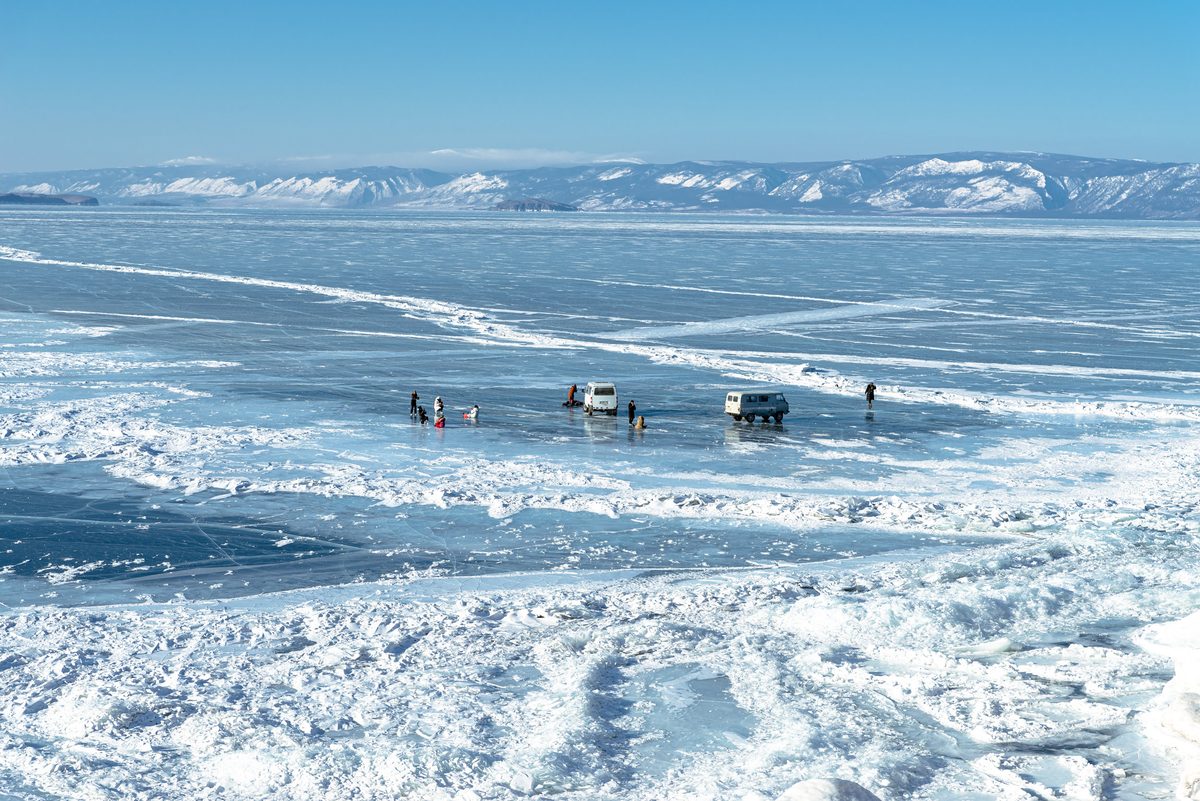
0.9167 g/cm³
and that is why lakes stay alive…
Water is one of very few substances whose solid form is lighter than its liquid. So ice floats. Freeze a lake and the ice sits on top and insulates what is under it, instead of sinking and stacking up from the bottom until nothing is left alive.
Ice Ih has a density of 0.9167 g/cm3 against liquid water at 0.9998 g/cm3. Because ice floats it forms an insulating surface layer rather than freezing water bodies solid from the bed upward.
02 / 08
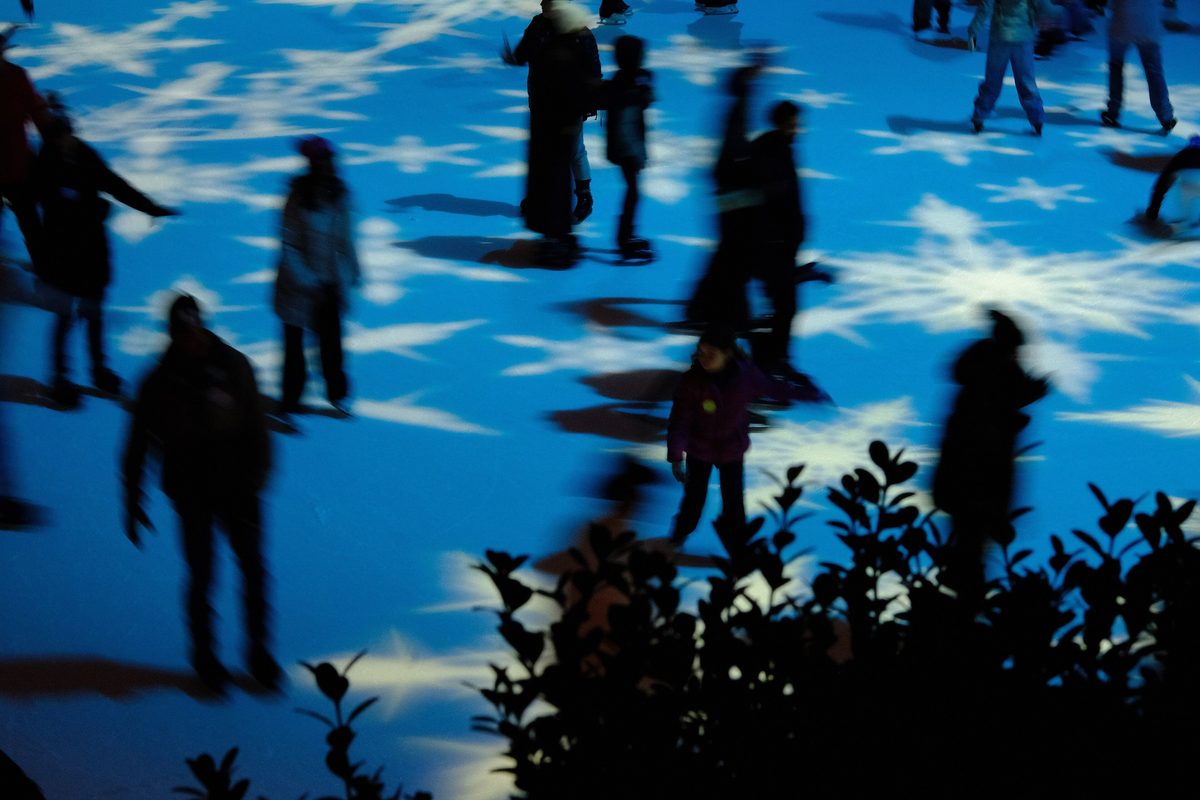
It is not slippery for the reason you were told
pressure has almost nothing to do with it…
Your weight does not melt the ice under you — pressure accounts for under one per cent of it. The surface carries a film a few molecules thick that behaves like a liquid and never properly freezes. It is still there at forty below.
Pressure melting contributes less than 1% of ice friction. Ice surfaces carry a nanometre-scale quasi-liquid layer of mobile water molecules, observed down to about -40°C.
03 / 08
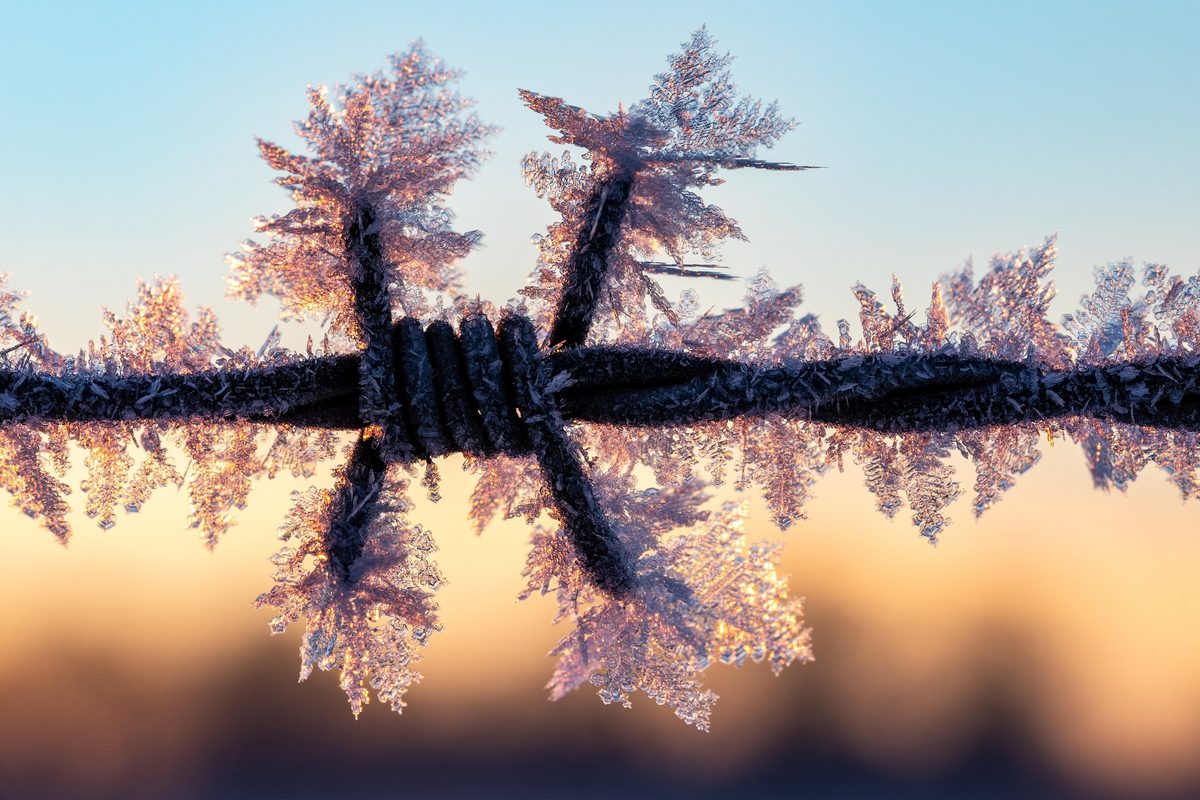
20 phases
and one of them flows…
There are at least twenty crystalline forms of ice. Inside Uranus and Neptune the pressure produces superionic ice, where the oxygen atoms lock into a rigid lattice while the hydrogen moves through it freely, the way a metal conducts.
At least 20 crystalline ice polymorphs are known (Ice Ih, II-XX). Above roughly 100 GPa, superionic ice forms: oxygen fixed in a lattice with mobile hydrogen ions, thought to occur in the interiors of Uranus and Neptune.
04 / 08
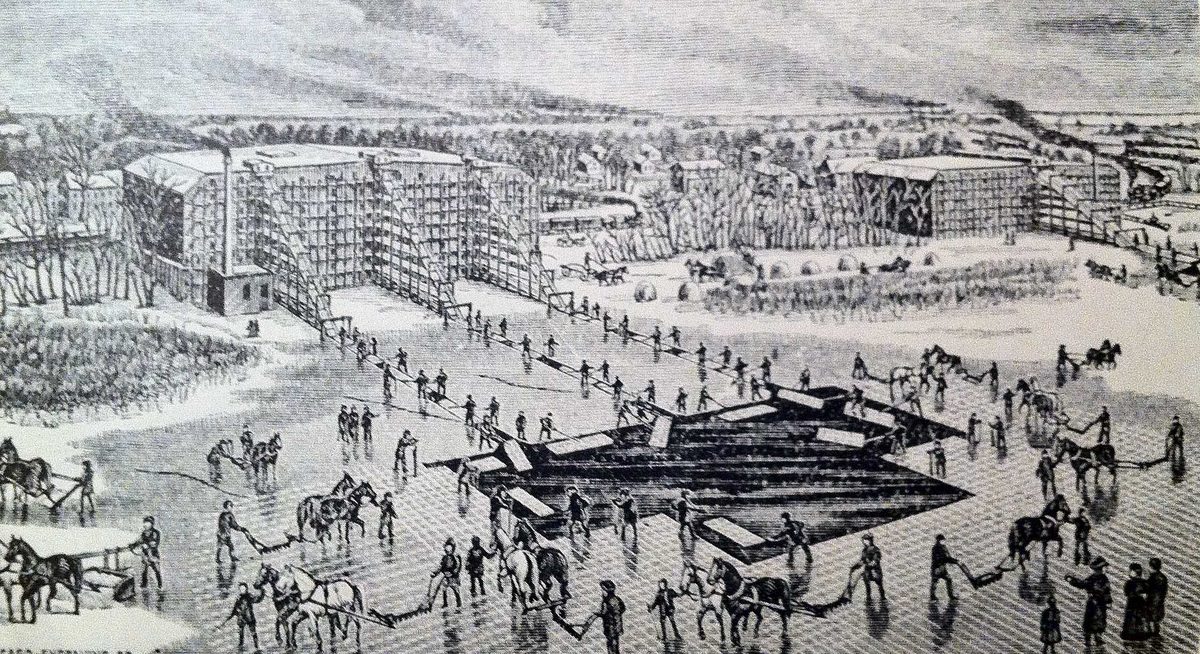
Then somebody sold it
to the tropics, by sailing ship…
In eighteen-oh-six Frederic Tudor began sawing blocks out of frozen Massachusetts ponds, packing them in sawdust and shipping them to Havana, Martinique and Calcutta. People thought he was mad. He was selling New England winter to the tropics.
Frederic Tudor began the international ice trade in 1806, cutting pond ice in New England and shipping it insulated in sawdust to the Caribbean and, from the 1830s, to Calcutta.
05 / 08
800,000 years
and it is not a proxy…
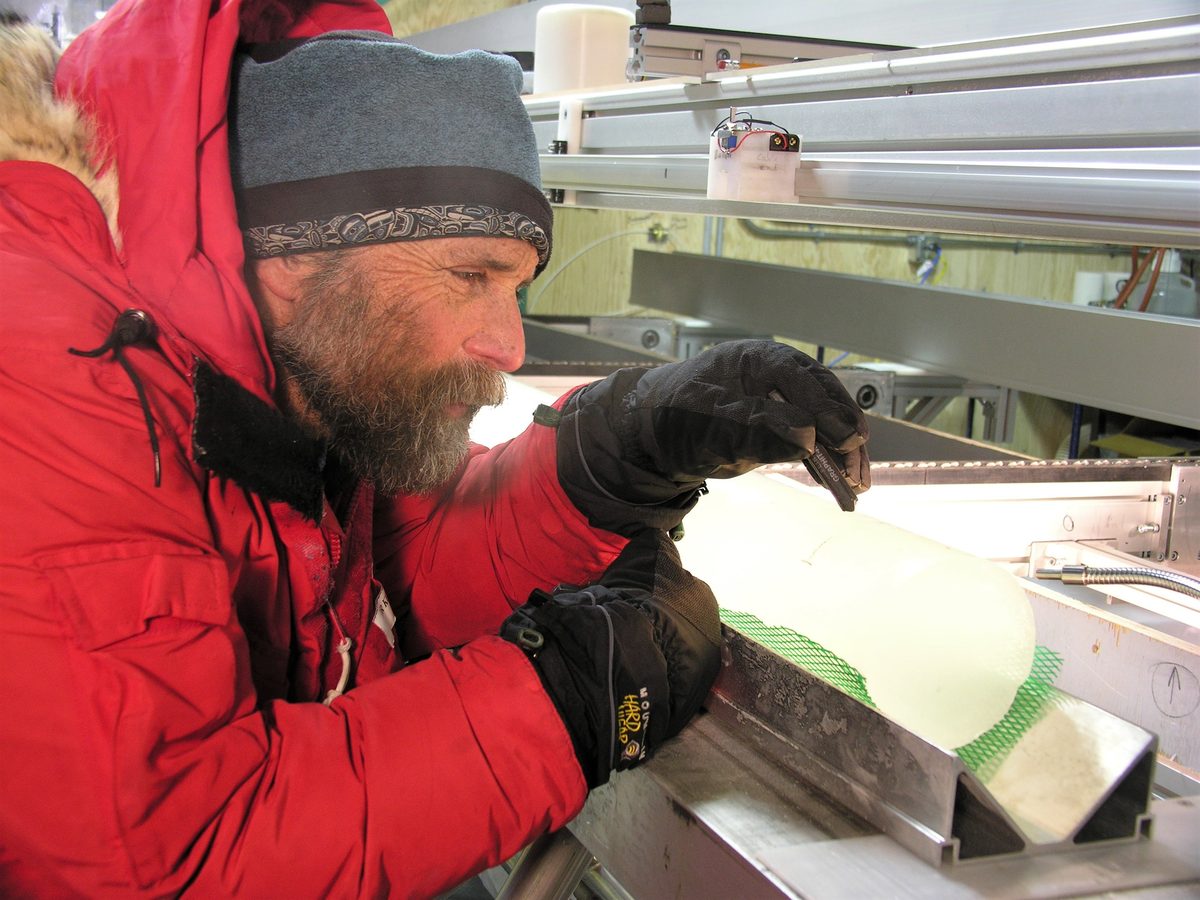
At Dome C in Antarctica the ice runs three thousand two hundred and sixty metres down to near bedrock, and eight hundred thousand years back. The bubbles in it are not an indicator of ancient air. They are ancient air, sealed and waiting.
The EPICA Dome C core reached about 3,260 m, a few metres above bedrock, covering roughly 800,000 years. Trapped bubbles are direct samples of past atmosphere; the lowest CO2 concentration recorded in the core is 172 ppm.
06 / 08
And under it, a lake
sealed since long before us…
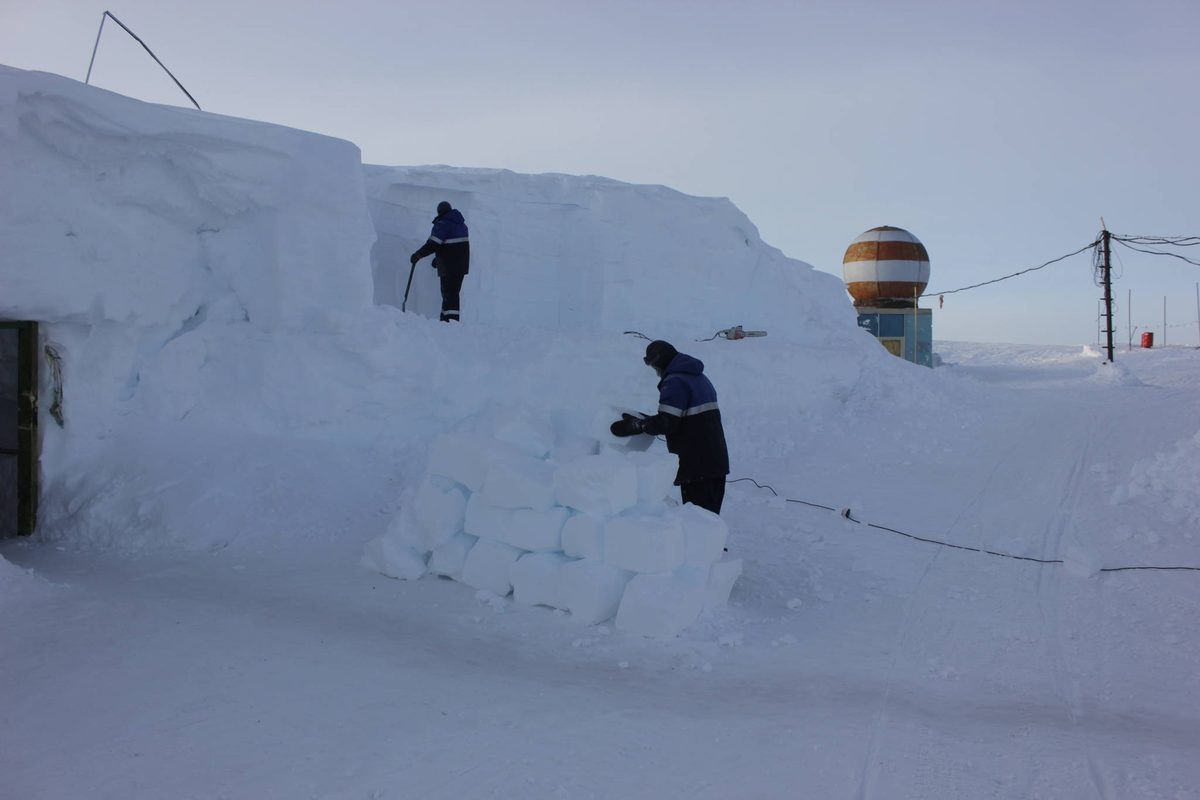
Four kilometres beneath that ice sits Lake Vostok — liquid water, under something like three hundred and forty atmospheres, cut off from the sky for roughly fifteen million years. Long before anything resembling a person existed.
Lake Vostok lies beneath approximately 4 km of East Antarctic ice, under around 340 atmospheres of pressure, and is estimated to have been isolated from the atmosphere for some 15 million years.
07 / 08
58 metres
if the whole of it went…
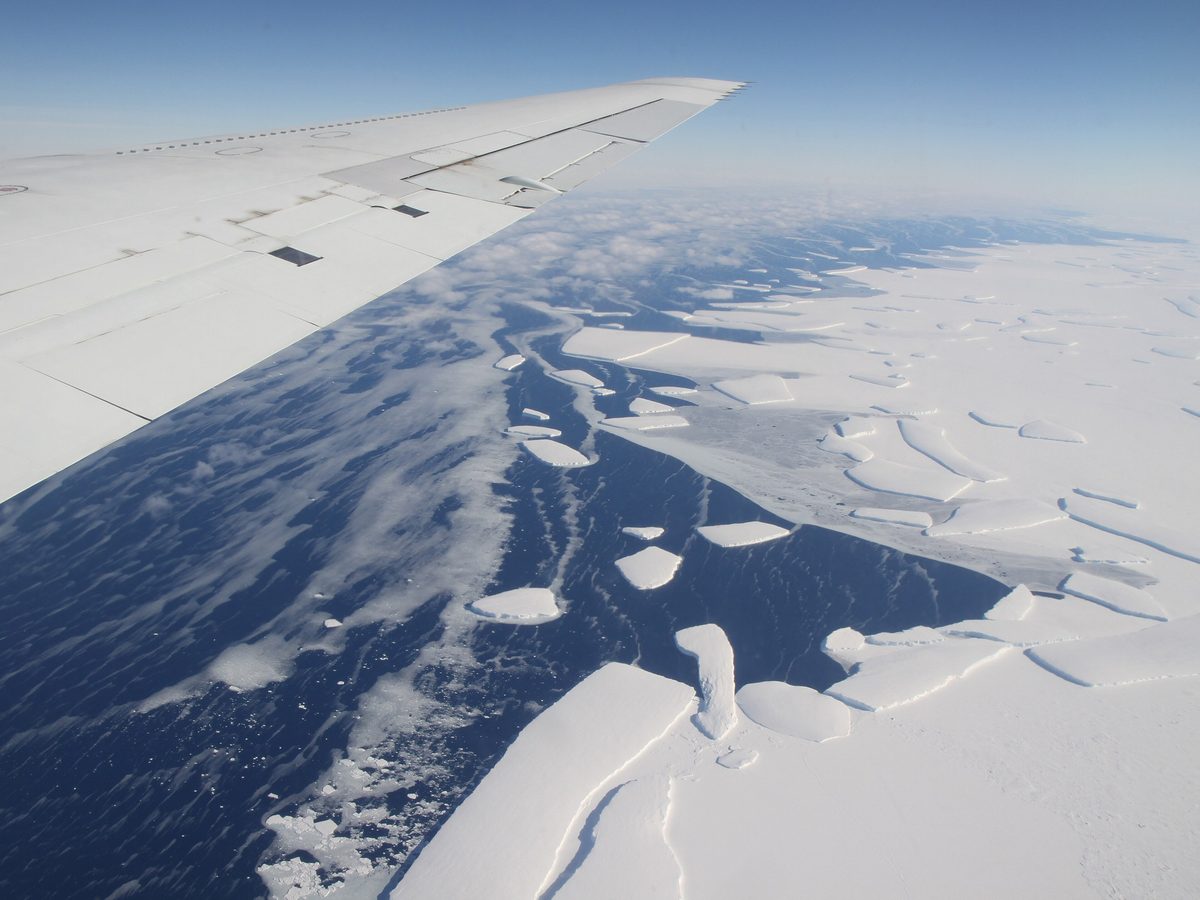
Ice sheets hold about sixty-nine per cent of the fresh water on Earth. Antarctica alone is fifty-eight metres of sea level. And fresh snow throws back ninety per cent of the sunlight that hits it, where open ocean keeps ninety-four.
Ice sheets contain around 69% of Earth's fresh water. Complete melting of the Antarctic Ice Sheet corresponds to about 58 m of sea level rise. Fresh snow albedo is around 0.9; open ocean absorbs roughly 94% of incident radiation.
08 / 08
Ice has gravity
which does something strange to the sea…
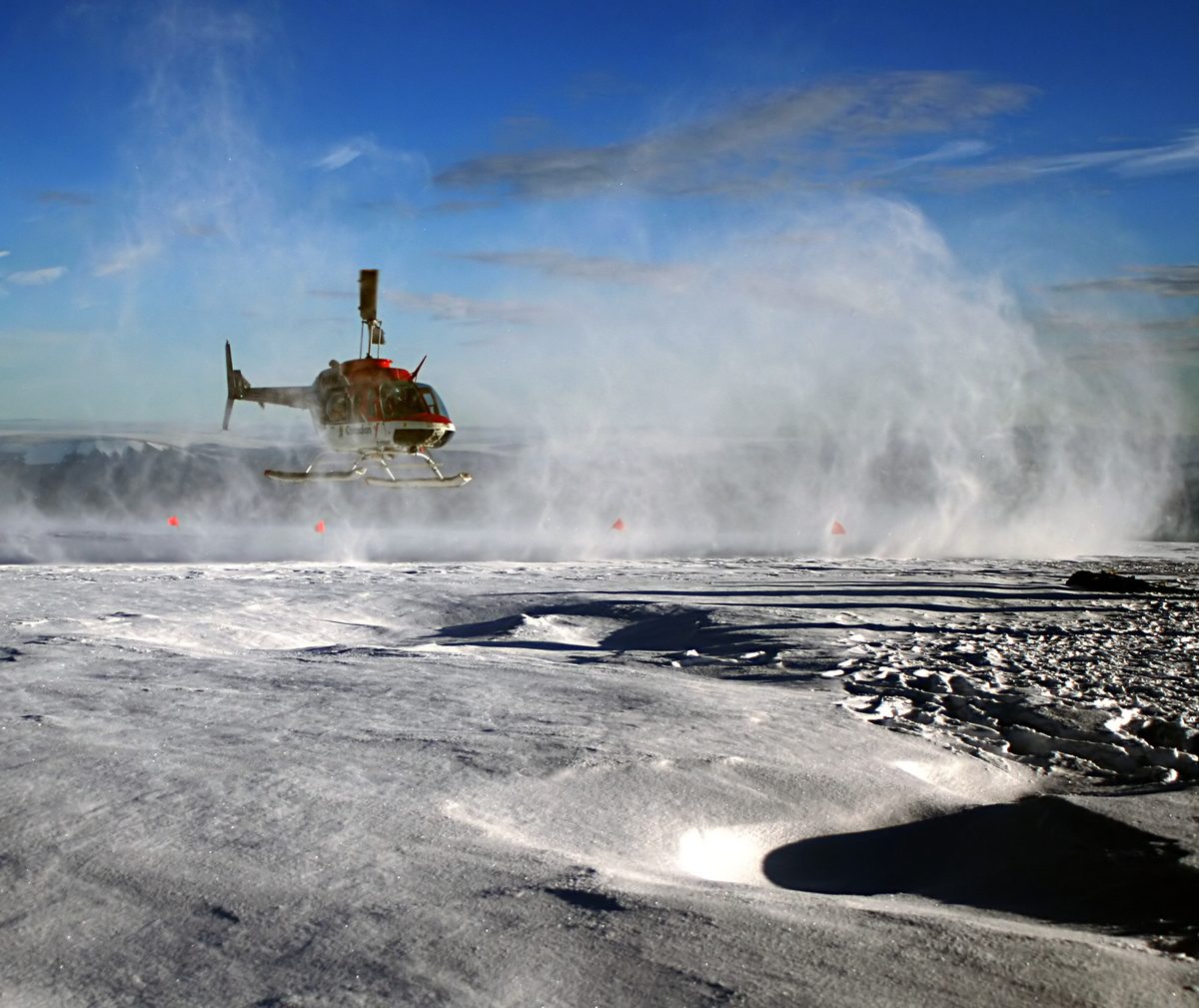
The Greenland sheet is heavy enough to pull the ocean toward itself and hold the sea higher along its own coast. So as Greenland melts, the water there will fall — and rise instead on the far side of the world.
The gravitational attraction of large ice sheets raises local sea level nearby. As Greenland loses mass, relative sea level in its immediate vicinity is expected to fall while rising disproportionately in the far field.
Sources
- Ice Ih has a density of 0.9167 g/cm3 against liquid water at 0.9998 g/cm3. Because ice floats it forms an insulating surface layer rather than freezing water bodies solid from the bed upward.
- Pressure melting contributes less than 1% of ice friction. Ice surfaces carry a nanometre-scale quasi-liquid layer of mobile water molecules, observed down to about -40°C.
- At least 20 crystalline ice polymorphs are known (Ice Ih, II-XX). Above roughly 100 GPa, superionic ice forms: oxygen fixed in a lattice with mobile hydrogen ions, thought to occur in the interiors of Uranus and Neptune.
- Frederic Tudor began the international ice trade in 1806, cutting pond ice in New England and shipping it insulated in sawdust to the Caribbean and, from the 1830s, to Calcutta.
- The EPICA Dome C core reached about 3,260 m, a few metres above bedrock, covering roughly 800,000 years. Trapped bubbles are direct samples of past atmosphere; the lowest CO2 concentration recorded in the core is 172 ppm.
- Lake Vostok lies beneath approximately 4 km of East Antarctic ice, under around 340 atmospheres of pressure, and is estimated to have been isolated from the atmosphere for some 15 million years.
- Ice sheets contain around 69% of Earth's fresh water. Complete melting of the Antarctic Ice Sheet corresponds to about 58 m of sea level rise. Fresh snow albedo is around 0.9; open ocean absorbs roughly 94% of incident radiation.
- The gravitational attraction of large ice sheets raises local sea level nearby. As Greenland loses mass, relative sea level in its immediate vicinity is expected to fall while rising disproportionately in the far field.
Image credits
- Iceberg in Pléneau Bay, Antarctica (6058728043).jpg — Liam Quinn from Canada, CC BY-SA 2.0 · Commons
- Lake Baikal frozen surface in winter.jpg — TomZelinsky, CC BY 4.0 · Commons
- Ice skating rink - Rockefeller center.jpg — Annanaïg, CC0 · Commons
- Dülmen, Hausdülmen, Zaun einer Wiese -- 2021 -- 5083.jpg — Dietmar Rabich, CC BY-SA 4.0 · Commons
- Harvesting Ice in Indiana.JPG — Chicago Engraving, Public domain · Commons
- Scientist examines an ice core.jpg — Kendrick15435, CC BY-SA 4.0 · Commons
- 2017-02-19 13-14-39 water provisioning at vostok base IMG 3102.jpg — Akulovz, CC BY 4.0 · Commons
- Antarctic Ice Shelf Loss Comes From Underneath (9036164848).jpg — NASA Goddard Space Flight Center from Greenbelt, MD, USA, Public domain · Commons
- Helicopter is taking off Greenland ice sheet.jpg — Brocken Inaglory, CC BY-SA 4.0 · Commons
.jpg)


.jpg)

More from By The Numbers
Nº 01
Underfoot
Six numbers from under your feet.
Nº 02
America
A country in six numbers.
Nº 03
The Brain
Six numbers from inside your head.

Nº 04
Reason
Your reasoning mind is a storyteller, not a judge.
Nº 05
Ciphers
The oldest arms race: keeping secrets, and breaking them.
Nº 06
Concrete
We made it stronger by putting steel in it, and gave it an expiry date.