By The Numbers · Nº 08
Salt
Salt fuels thinking. Not as a metaphor — as a line on your energy budget.
01 / 08
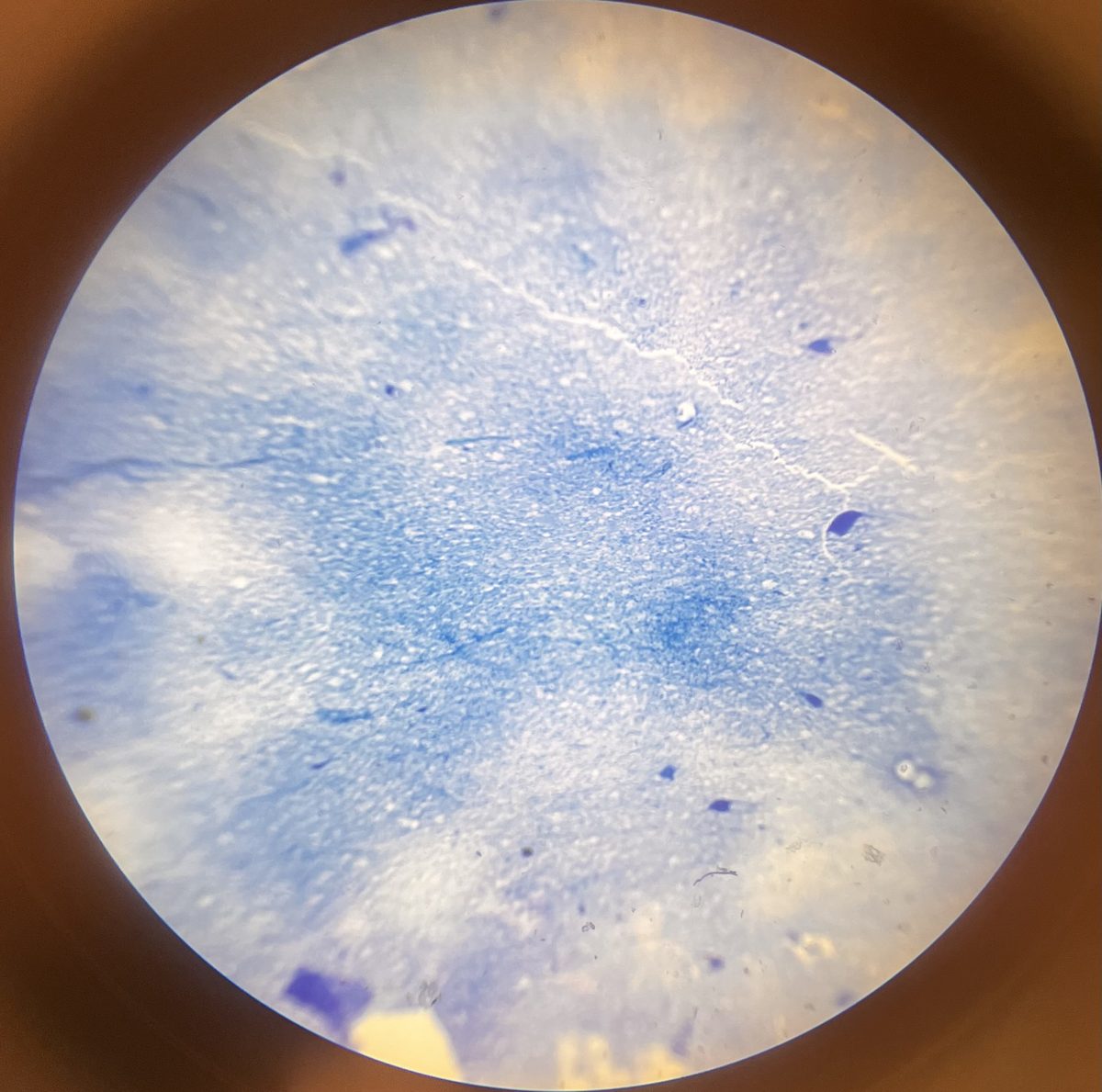
30% of resting energy
and it never switches off…
Salt fuels thinking, and not as a metaphor. Around a third of the energy your body burns at rest goes to one molecular pump, pushing three sodium ions out of your cells and two potassium ions in. It never stops.
The Na+/K+-ATPase exports 3 Na+ and imports 2 K+ per ATP hydrolysed. Estimates of its share of basal metabolic energy commonly run to around 20-30% whole-body, and a majority of the brain's ATP budget.
02 / 08

The signal is free
the bill comes afterwards…
A nerve impulse costs nothing to fire. Sodium simply falls into the cell, down the gradient, the way water runs downhill. The energy goes on pumping it back out again. You do not pay to think. You pay to be ready to think again.
Action potentials are driven by passive Na+ influx down an electrochemical gradient through voltage-gated channels. Metabolic cost is incurred by the Na+/K+-ATPase restoring the gradient afterwards, not by the depolarisation itself.
03 / 08
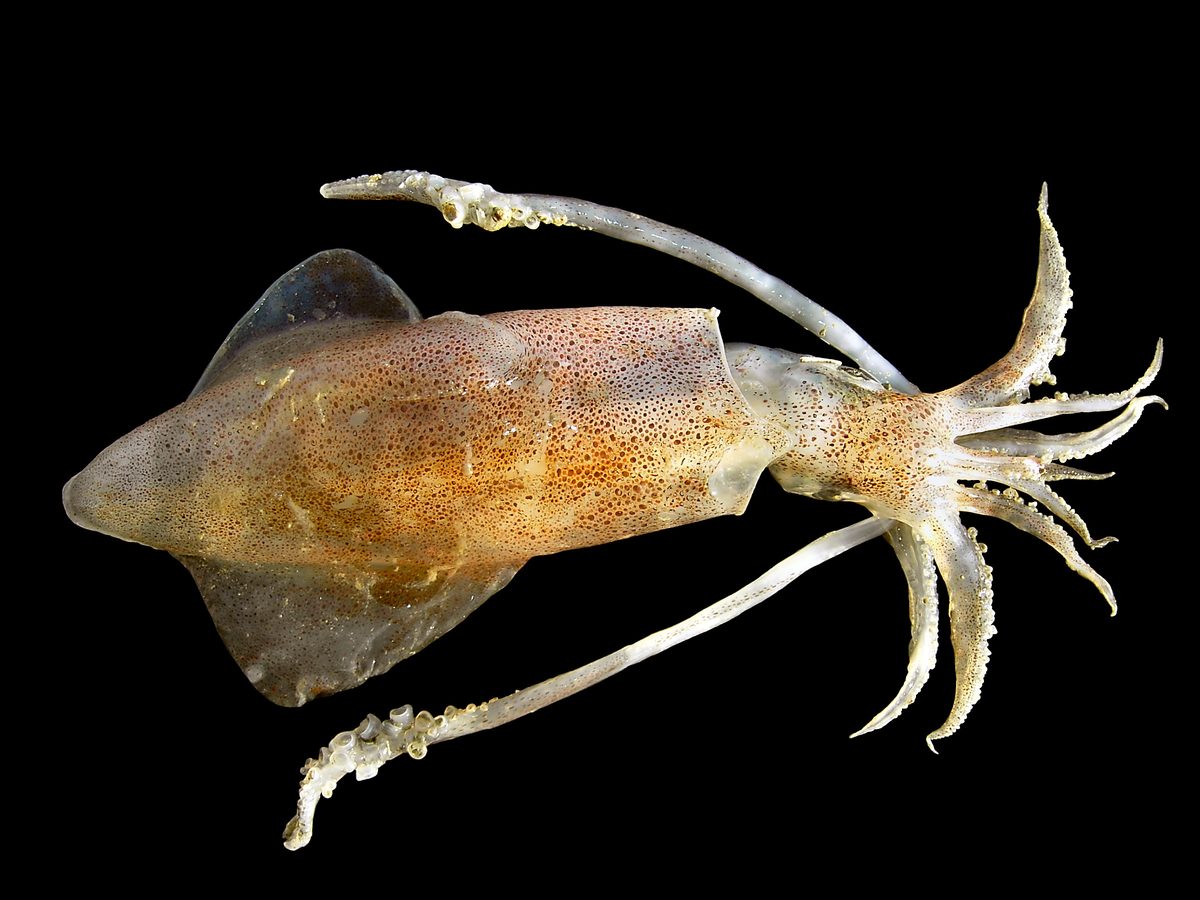
1 millimetre
which is enormous, for a nerve…
We know this because of a squid. Its giant axon runs about a millimetre across — hundreds of times wider than ours, wide enough to thread a wire down the middle of it. Hodgkin and Huxley did exactly that, and measured a thought.
The squid giant axon reaches up to ~1 mm in diameter, permitting insertion of internal electrodes. Alan Hodgkin and Andrew Huxley used it to describe the ionic basis of the action potential; Nobel Prize in Physiology or Medicine, 1963.
04 / 08
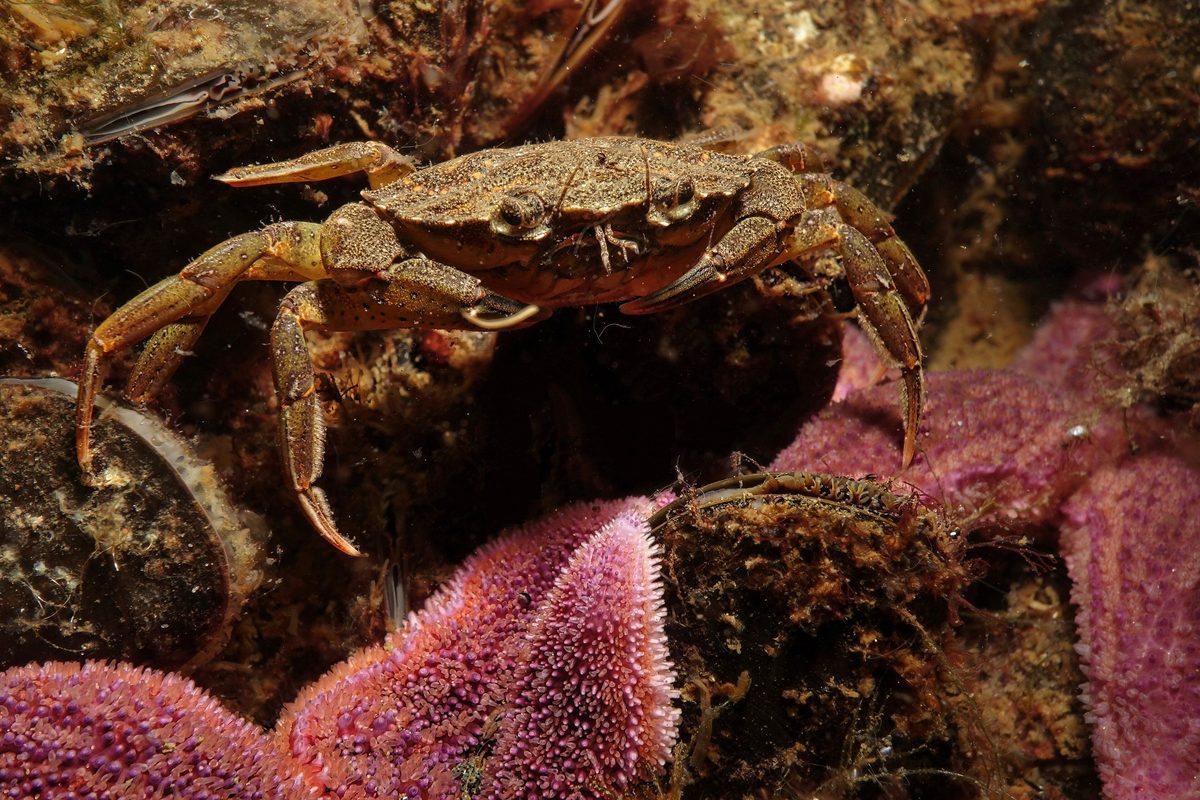
Then someone found the pump
in a crab's nerve, in 1957…
Jens Skou was studying how anaesthetics worked and found the machine instead — the enzyme that does the pumping, in the nerve of a shore crab. Stockholm took forty years to notice. He collected the chemistry prize at seventy-nine.
Jens Christian Skou identified the Na+/K+-ATPase in 1957 while working on nerve membranes of the shore crab Carcinus maenas. He shared the Nobel Prize in Chemistry in 1997, aged 79.
05 / 08
1940
and nobody had taught him…
A paper in JAMA that year described a boy whose adrenal glands could not hold on to sodium, so it kept leaving him. Untaught, from about the age of one, he replaced it by the handful. The craving is calibrated to the deficit — which is why yours stays quiet.
Wilkins L, Richter CP, 'A great craving for salt by a child with cortico-adrenal insufficiency', JAMA, 1940. The child had adrenal insufficiency causing renal sodium wasting; the appetite was a response to pathological loss, not a general benefit of high intake. Sodium appetite is innate rather than learned and is driven by aldosterone and angiotensin signalling under depletion; in people with normal adrenal function it is regulated and high intake is associated with hypertension rather than benefit.
06 / 08

Meat arrives already salted
and grain does not…
Carnivores never need a salt lick. Plants are rich in potassium and poor in sodium, so herbivores will walk for days to reach a mineral outcrop. When we took up farming we became herbivores — and invented a hunger that had to be traded for.
Animal tissue supplies sodium; plant material is potassium-rich and sodium-poor, so herbivores seek mineral licks while carnivores generally do not. The shift to cereal-based agricultural diets is widely linked to the emergence of salt as a traded and taxed commodity.
07 / 08
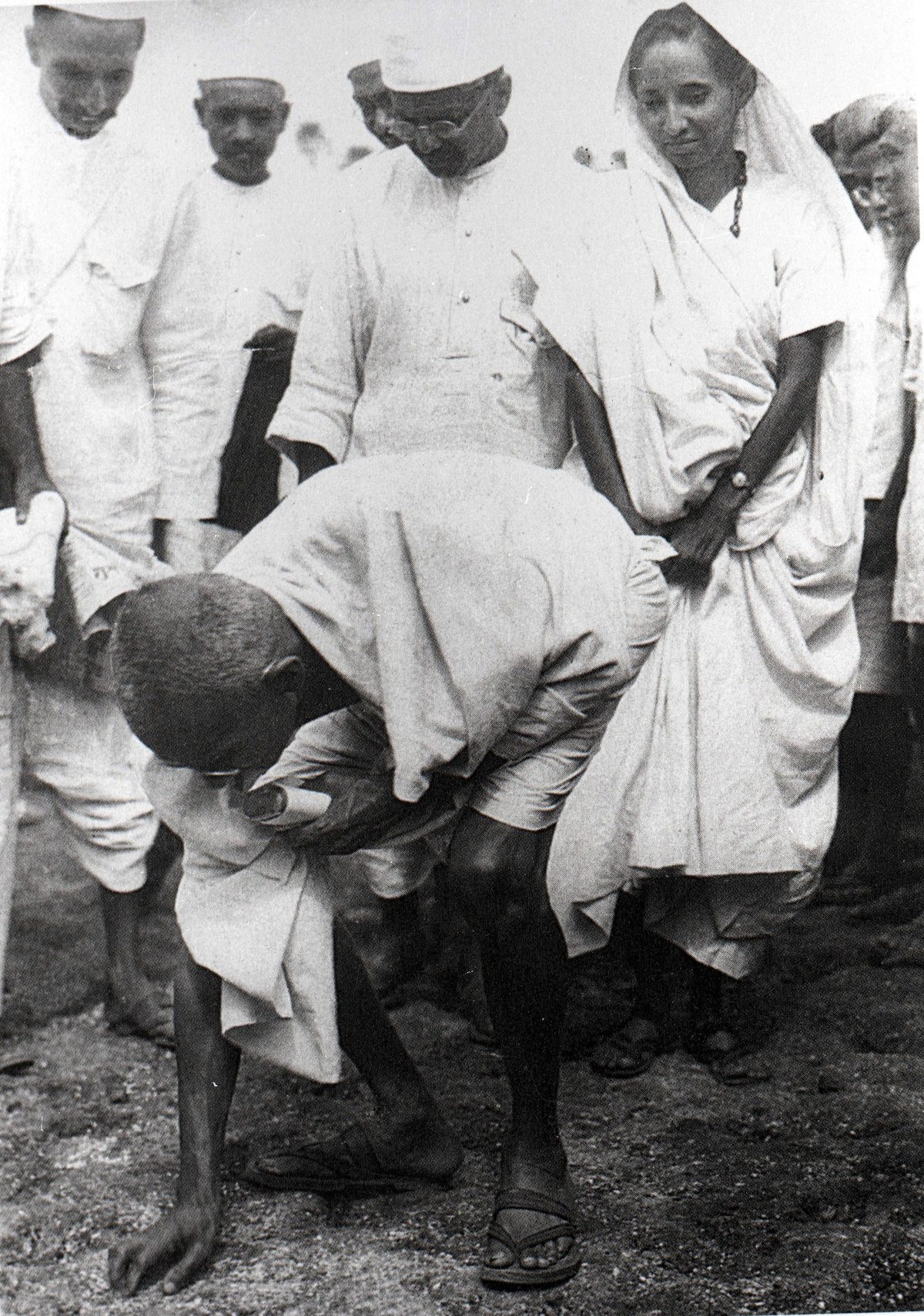
240 miles
to pick up a handful of mud…
Rome paid its soldiers an allowance for salt — salarium, which is why you have a salary. Britain went further and taxed it in India. In 1930 Gandhi walked two hundred and forty miles to the coast and picked up untaxed salt off the beach.
Roman salarium: an allowance connected to salt, the origin of 'salary'. The British Salt Act imposed a monopoly and tax on salt in India. Gandhi's Salt March covered roughly 240 miles from Sabarmati to Dandi, 12 March - 6 April 1930.
08 / 08

Then they put iodine in it
and repaired the thing it powers…
Michigan, 1924. Iodine added to ordinary table salt took Midwest goitre from around thirty per cent to almost nothing. Iodine deficiency is still the leading preventable cause of brain damage on Earth, and in pregnancy it quietly costs a child ten to thirteen IQ points.
Iodised salt was introduced in Michigan in 1924, reducing regional goitre prevalence from around 30% to near zero. WHO identifies iodine deficiency as the most common preventable cause of brain damage worldwide; gestational deficiency is associated with losses of roughly 10-13 IQ points.
Sources
- The Na+/K+-ATPase exports 3 Na+ and imports 2 K+ per ATP hydrolysed. Estimates of its share of basal metabolic energy commonly run to around 20-30% whole-body, and a majority of the brain's ATP budget.
- Action potentials are driven by passive Na+ influx down an electrochemical gradient through voltage-gated channels. Metabolic cost is incurred by the Na+/K+-ATPase restoring the gradient afterwards, not by the depolarisation itself.
- The squid giant axon reaches up to ~1 mm in diameter, permitting insertion of internal electrodes. Alan Hodgkin and Andrew Huxley used it to describe the ionic basis of the action potential; Nobel Prize in Physiology or Medicine, 1963.
- Jens Christian Skou identified the Na+/K+-ATPase in 1957 while working on nerve membranes of the shore crab Carcinus maenas. He shared the Nobel Prize in Chemistry in 1997, aged 79.
- Wilkins L, Richter CP, 'A great craving for salt by a child with cortico-adrenal insufficiency', JAMA, 1940. The child had adrenal insufficiency causing renal sodium wasting; the appetite was a response to pathological loss, not a general benefit of high intake. Sodium appetite is innate rather than learned and is driven by aldosterone and angiotensin signalling under depletion; in people with normal adrenal function it is regulated and high intake is associated with hypertension rather than benefit.
- Animal tissue supplies sodium; plant material is potassium-rich and sodium-poor, so herbivores seek mineral licks while carnivores generally do not. The shift to cereal-based agricultural diets is widely linked to the emergence of salt as a traded and taxed commodity.
- Roman salarium: an allowance connected to salt, the origin of 'salary'. The British Salt Act imposed a monopoly and tax on salt in India. Gandhi's Salt March covered roughly 240 miles from Sabarmati to Dandi, 12 March - 6 April 1930.
- Iodised salt was introduced in Michigan in 1924, reducing regional goitre prevalence from around 30% to near zero. WHO identifies iodine deficiency as the most common preventable cause of brain damage worldwide; gestational deficiency is associated with losses of roughly 10-13 IQ points.
Image credits
- Salt Farmers - Pak Thale.jpg — JJ Harrison (https://www.jjharrison.com.au/), CC BY-SA 3.0 · Commons
- Motor nerve cells with synopsis.jpg — Laurl.pk, CC BY 4.0 · Commons
- Hameg Oscilloscope HMO3004 Series.jpg — Ordercrazy, CC0 · Commons
- Loligo vulgaris.jpg — Hans Hillewaert, CC BY-SA 4.0 · Commons
- Carcinus maenas (Strandkrabbe, shore crab) (28179285974).jpg — Lars Behnke, CC BY-SA 2.0 · Commons
- Himalayan salt (coarse).jpg — Ivar Leidus, CC BY-SA 4.0 · Commons
- Wheat harvest, Raisen district, Madhya Pradesh, India.jpg — Yann (talk), CC BY-SA 4.0 · Commons
- Gandhi at Dandi, 5 April 1930.jpg — Unknown author, Public domain · Commons
- Salt shaker on a table casting a long shadow (51172962694).jpg — Ivan Radic, CC BY 2.0 · Commons


_(28179285974).jpg)
.jpg)


.jpg)
More from By The Numbers
Nº 01
Underfoot
Six numbers from under your feet.

Nº 02
America
A country in six numbers.
Nº 03
The Brain
Six numbers from inside your head.

Nº 04
Reason
Your reasoning mind is a storyteller, not a judge.
Nº 05
Ciphers
The oldest arms race: keeping secrets, and breaking them.

Nº 06
Concrete
We made it stronger by putting steel in it, and gave it an expiry date.