By The Numbers · Nº 09
Silence
We built rooms to remove the echo, and found out what the echo had been doing for us.
01 / 08

1943
and it began as an intercom problem…
In 1943 Leo Beranek built the first modern anechoic chamber at Harvard, on a secret Navy contract. Bomber crews could not hear each other over the engines, and headsets had to be tested somewhere the engines were not.
Leo Beranek designed the first modern anechoic chamber at Harvard University in 1943 under a wartime US Navy contract, to test communications headsets for bomber crews against high-altitude engine noise. Beranek later co-founded Bolt, Beranek and Newman.
02 / 08
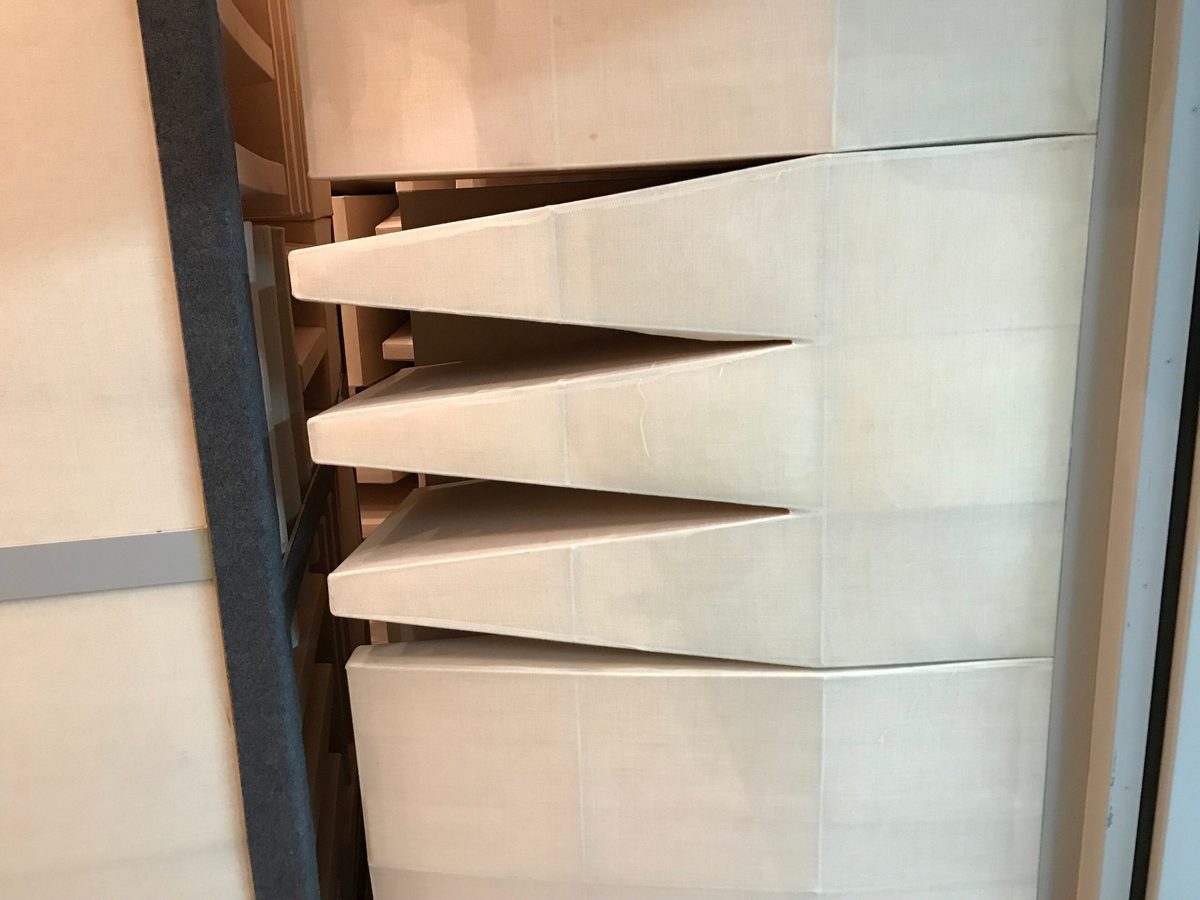
The wedges do not block sound
there is nothing to bounce off…
The spikes on the walls are not blocking anything. They are a gradual transition — open air at the tip, dense fibreglass at the base — so the sound never meets a surface to reflect from. You do not stop the wave. You take away the mirror.
Anechoic wedges act as geometric impedance transformers, grading from the acoustic impedance of open air (~415 rayl) into dense absorbing material so that energy is dissipated rather than reflected at a boundary.
03 / 08
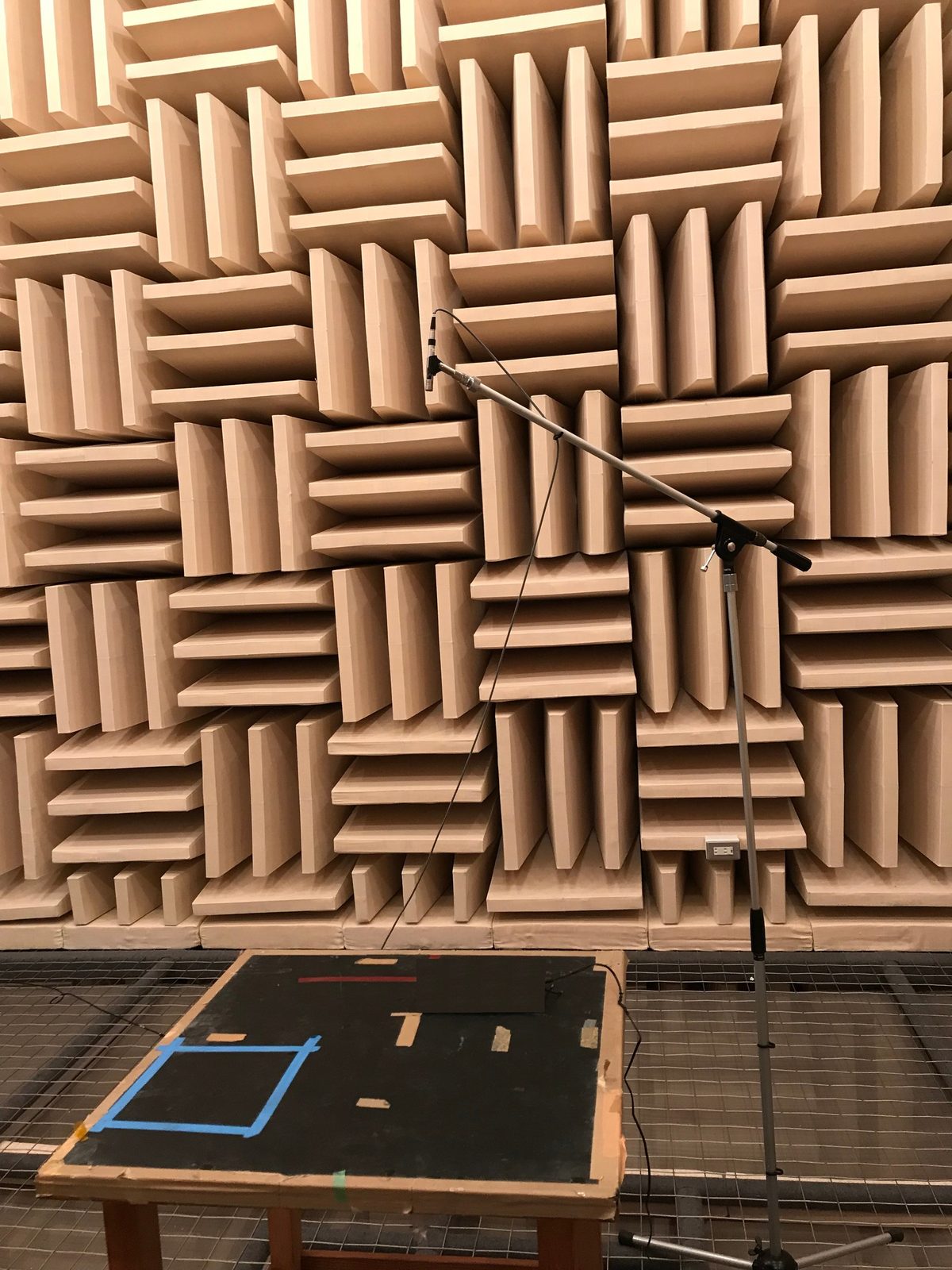
1.7 metres
for one low note…
A wedge must be about a quarter as long as the wave it swallows. A fifty hertz note runs nearly seven metres, so the spikes stand one point seven metres deep. The lowest note you want gone decides how big the room is.
Anechoic wedge depth must be at least a quarter of the wavelength of the lowest frequency to be absorbed. At 50 Hz the wavelength is about 6.8 m, requiring wedges around 1.7 m deep.
04 / 08
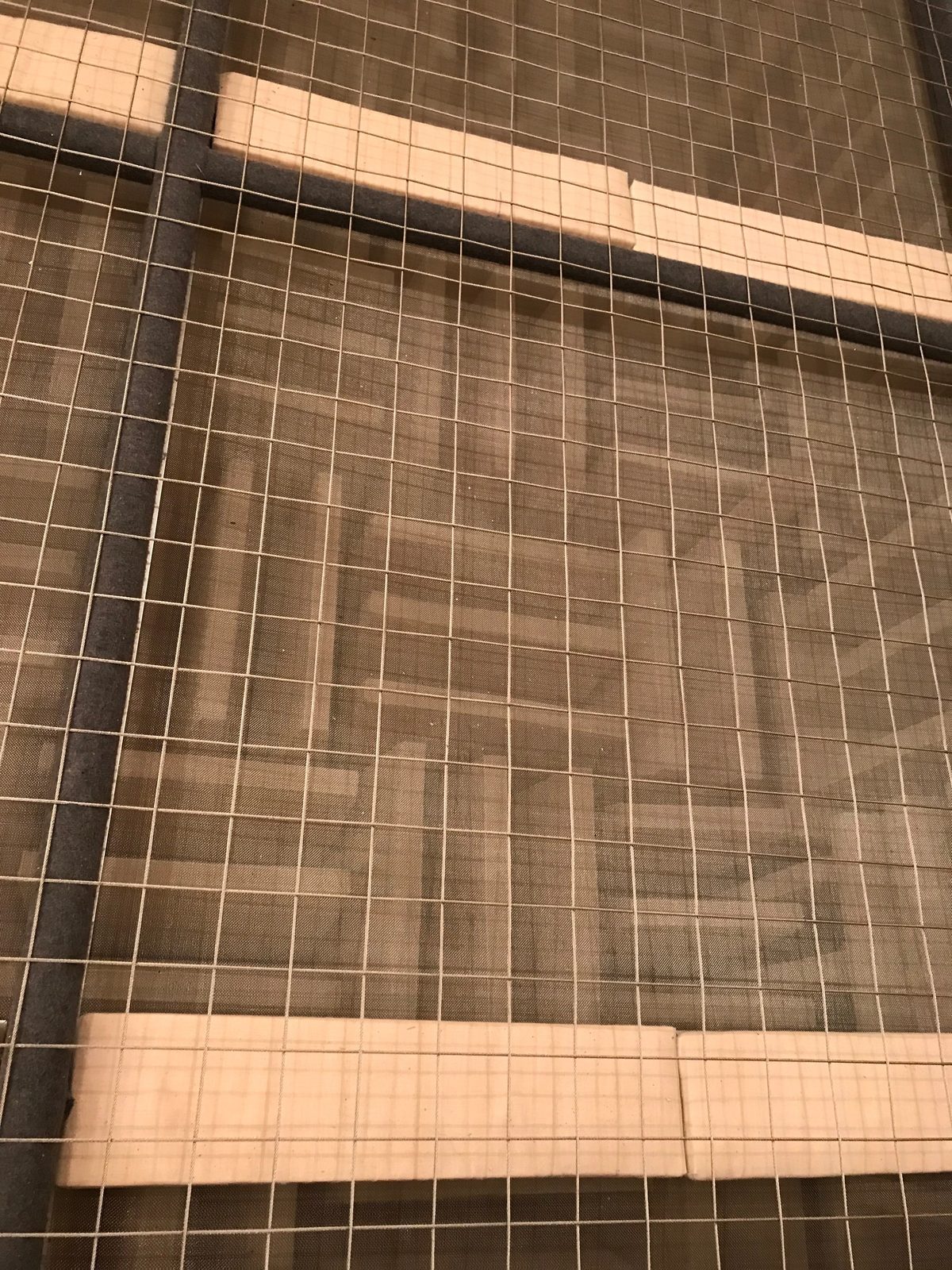
The room floats
sixty-eight tons of it, on springs…
Microsoft's chamber is a sixty-eight tonne concrete shell resting on sixty-eight steel springs, so the building's own shivering never reaches it. The floor is a net of aircraft cable stretched over a pit of spikes. You do not walk in. You walk above.
The Building 87 chamber in Redmond is a concrete shell of roughly 68 tons supported on 68 steel coil springs with damping, isolating it from structural and seismic vibration. The working floor is a tensioned steel cable mesh suspended over the lower wedge field.
05 / 08
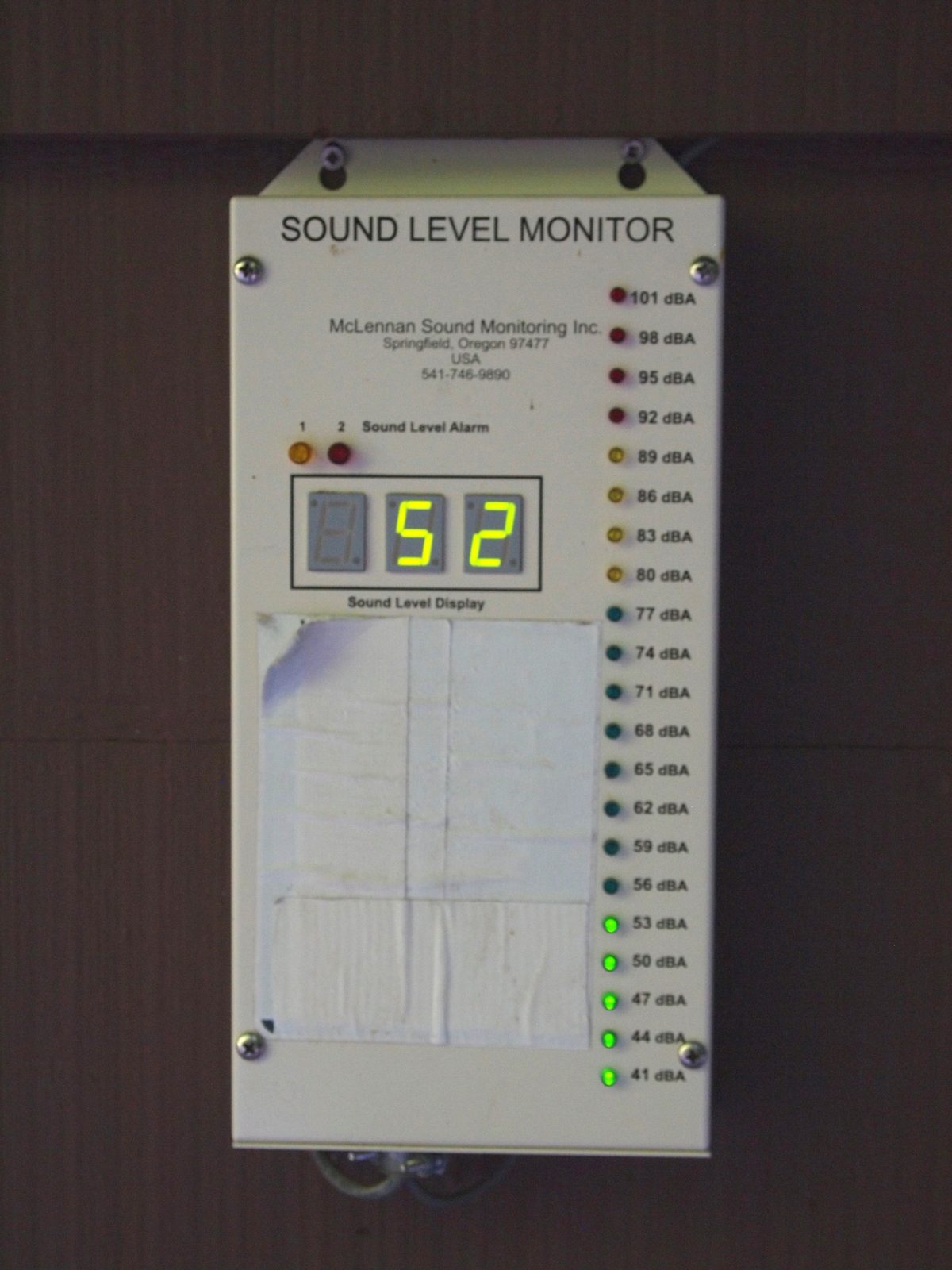
−20.35 dBA
and the floor is minus twenty-three…
It measures minus twenty point three five decibels. The floor — the quietest anything can ever be — sits near minus twenty-three, and that is not an engineering limit. It is the sound of air molecules striking the microphone. They got within three decibels of thermodynamics.
Microsoft's Building 87 anechoic chamber measured −20.35 dBA in 2015, a Guinness-recognised record. The thermal noise floor of air at room temperature, set by Brownian motion of air molecules, is around −23 dBA, a physical rather than engineering limit.
06 / 08
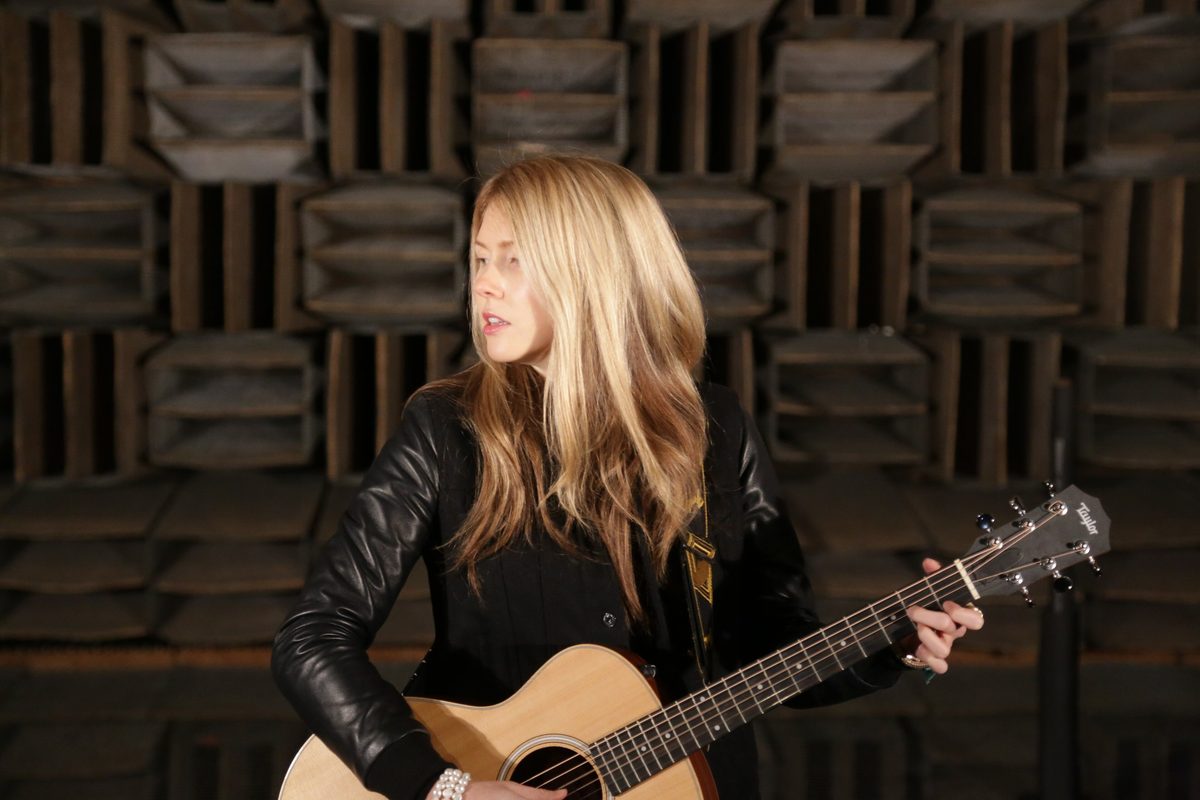
Then you start hearing yourself
and if you shut your eyes, you sway…
With nothing outside to listen to, the brain turns the gain up and finds what was always there — your heart, blood moving in your neck, your own joints working. And if you close your eyes you sway, because the reflections had quietly been helping you stand up.
In the absence of external sound, central auditory gain increases and visitors commonly report hearing cardiovascular, respiratory and joint sounds. Reflected sound also contributes to spatial orientation; removing it degrades postural stability, most noticeably with eyes closed.
07 / 08
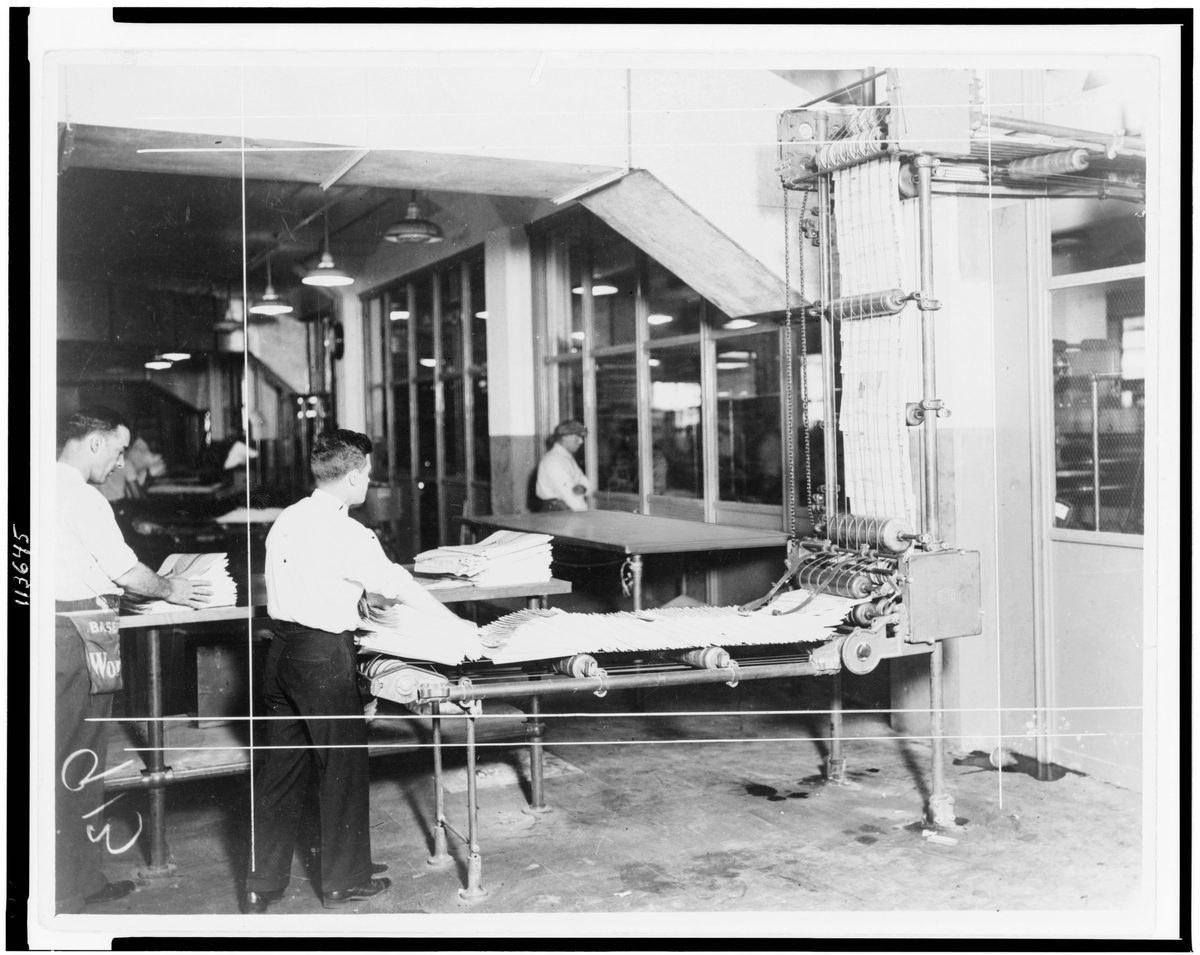
45 minutes
which is the part that is not true…
The story is that nobody lasts forty-five minutes inside before going mad. It travelled the world. It is not true — the engineers who work in these rooms spend whole days in them. Real sensory isolation does strange things, but not that, and not that fast.
A widely circulated claim, attached to the Orfield Laboratories chamber in Minneapolis (−9.4 dBA), holds that nobody can remain inside for 45 minutes. Acoustics staff routinely work full days in anechoic chambers. Effects reported in prolonged sensory-deprivation research are not established for short anechoic exposure.
08 / 08
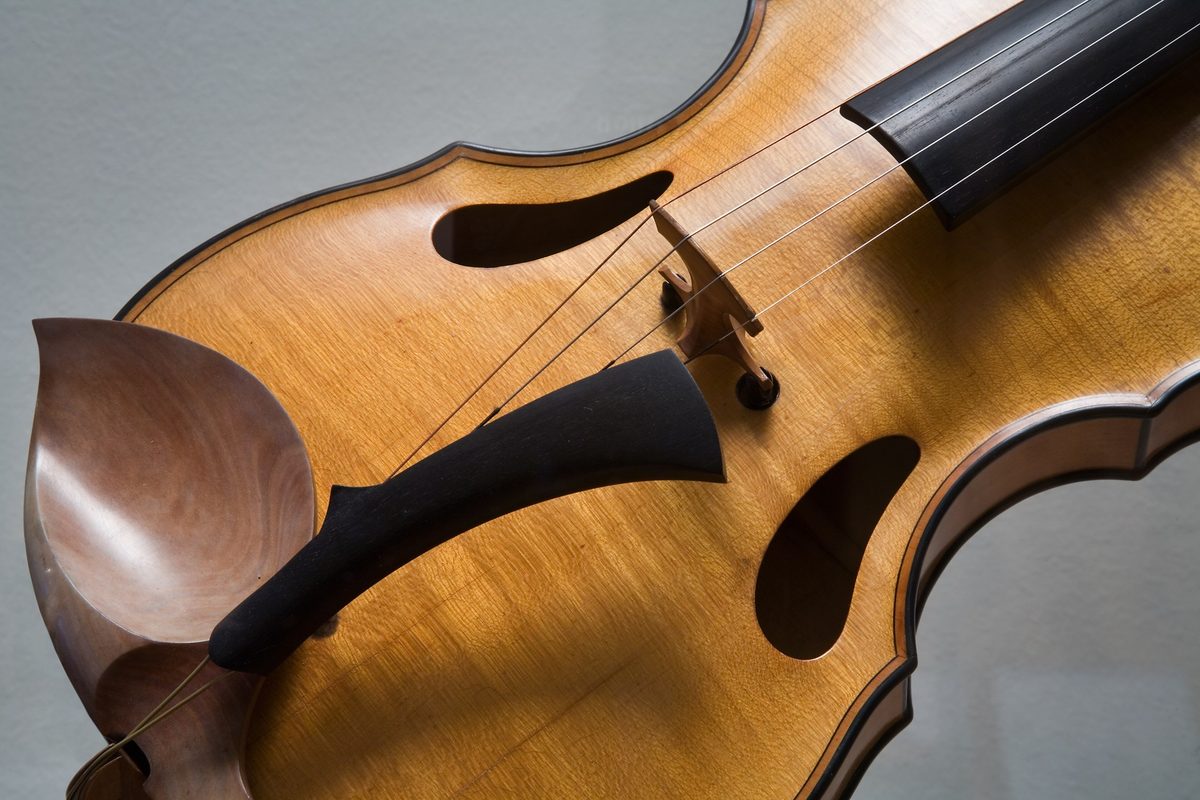
Musicians hate it
because the warmth was never in the violin…
Play a violin in one and it sounds thin and dead. Everything you think of as the warmth of an instrument — the bloom, the decay — is the room answering it. Take the room away and you find the sound was never only the instrument.
Instrument timbre depends heavily on early reflections and reverberant decay. In anechoic conditions instruments are consistently described as thin, dry and lifeless, since only the direct sound reaches the listener.
Sources
- Leo Beranek designed the first modern anechoic chamber at Harvard University in 1943 under a wartime US Navy contract, to test communications headsets for bomber crews against high-altitude engine noise. Beranek later co-founded Bolt, Beranek and Newman.
- Anechoic wedges act as geometric impedance transformers, grading from the acoustic impedance of open air (~415 rayl) into dense absorbing material so that energy is dissipated rather than reflected at a boundary.
- Anechoic wedge depth must be at least a quarter of the wavelength of the lowest frequency to be absorbed. At 50 Hz the wavelength is about 6.8 m, requiring wedges around 1.7 m deep.
- The Building 87 chamber in Redmond is a concrete shell of roughly 68 tons supported on 68 steel coil springs with damping, isolating it from structural and seismic vibration. The working floor is a tensioned steel cable mesh suspended over the lower wedge field.
- Microsoft's Building 87 anechoic chamber measured −20.35 dBA in 2015, a Guinness-recognised record. The thermal noise floor of air at room temperature, set by Brownian motion of air molecules, is around −23 dBA, a physical rather than engineering limit.
- In the absence of external sound, central auditory gain increases and visitors commonly report hearing cardiovascular, respiratory and joint sounds. Reflected sound also contributes to spatial orientation; removing it degrades postural stability, most noticeably with eyes closed.
- A widely circulated claim, attached to the Orfield Laboratories chamber in Minneapolis (−9.4 dBA), holds that nobody can remain inside for 45 minutes. Acoustics staff routinely work full days in anechoic chambers. Effects reported in prolonged sensory-deprivation research are not established for short anechoic exposure.
- Instrument timbre depends heavily on early reflections and reverberant decay. In anechoic conditions instruments are consistently described as thin, dry and lifeless, since only the direct sound reaches the listener.
Image credits
- Radio-frequency-anechoic-chamber-HDR-0a.jpg — Adamantios, CC BY-SA 3.0 · Commons
- Memphis Belle crew.jpg — Unknown, Public domain · Commons
- Anechoic chamber-4.jpg — Togabi, CC BY-SA 4.0 · Commons
- Anechoic chamber-3.jpg — Togabi, CC BY-SA 4.0 · Commons
- Anechoic chamber-2.jpg — Togabi, CC BY-SA 4.0 · Commons
- Sound Level Monitor.jpg — Z22, CC BY-SA 4.0 · Commons
- Beatie Wolfe in the anechoic chamber at Bell Labs.jpg — Swannsong1, CC BY-SA 4.0 · Commons
- Interior view of newspaper delivery room showing man taking stack of newspapers from machine) - World-Telegram photo LCCN95506971.jpg — Miscellaneous Items in High Demand, PPOC, Library of Congress, Public domain · Commons
- Vienna - Violin detail - 0061.jpg — Jorge Royan, CC BY-SA 3.0 · Commons


_-_World-Telegram_photo_LCCN95506971.jpg)

More from By The Numbers

Nº 01
Underfoot
Six numbers from under your feet.

Nº 02
America
A country in six numbers.

Nº 03
The Brain
Six numbers from inside your head.

Nº 04
Reason
Your reasoning mind is a storyteller, not a judge.

Nº 05
Ciphers
The oldest arms race: keeping secrets, and breaking them.
Nº 06
Concrete
We made it stronger by putting steel in it, and gave it an expiry date.